
I composed sketches for the work whilst on holiday in Bernaray and North Uist with my wife Jacqui in 2017. As can be seen in the film we were staying in a blackhouse on the edges of the Bays loch which provided inspiration and peace to compose.
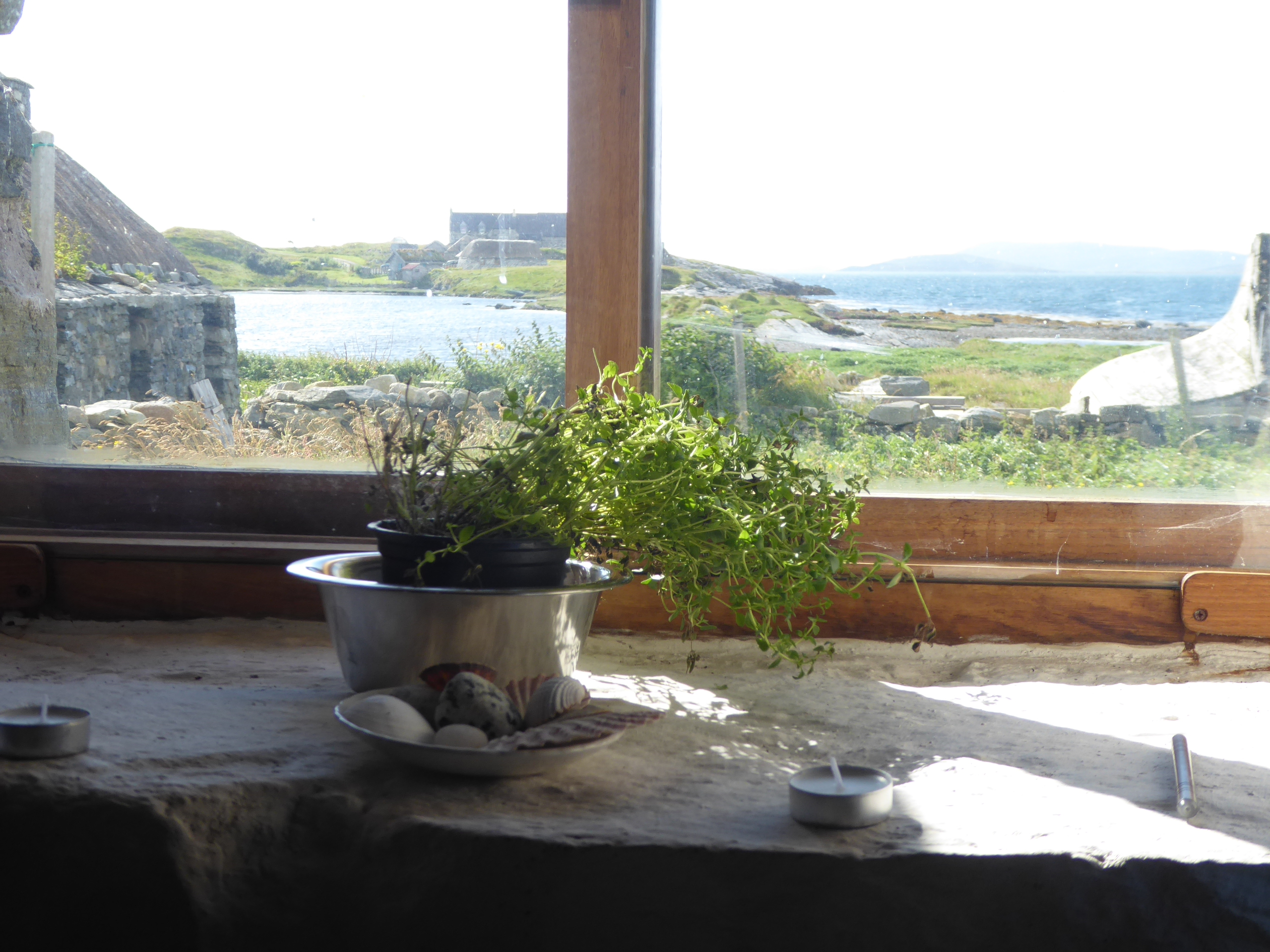
One of the most striking features of a holiday in the Outer Hebrides is the quickly changing skies, colours and weather. I wanted to write a piece which featured the intertwining of musical textures which increase in complexity before ebbing away to a final drone.
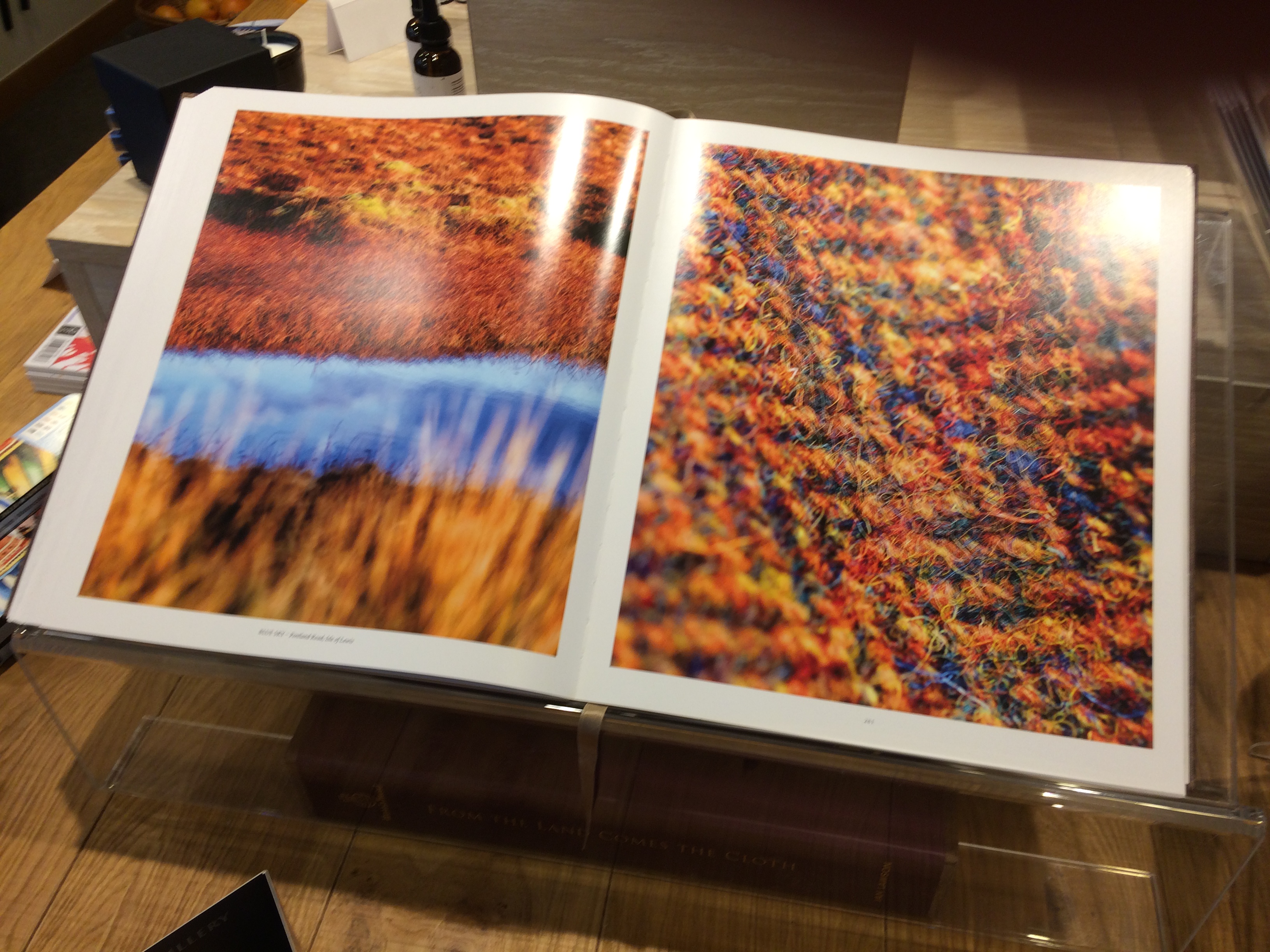
I was inspired by a page in a book about the Scottish tweed industry. It is interesting that the colours in a particular tweed closely resemble the colours of the local landscape. The photo isn’t good but it makes the point. The colours of water, rocks, seaweed, grasses of the landscape are woven into the tweed.
There are 3 main layers in ‘Shades of Blue-Green’ representing fast movement (wind across water and grasses and quickly changing sky colours), a slower movement of light across mountains and hills, and an ever-present song of the Gaelic community as represented by the solo ‘cello. The slower evolving light I have chosen to be represented by a drone created by recording a ‘cello with a transducer microphone.
These elements intertwine throughout, and in the final part of the piece the song becomes actual quoting from ‘Tha Bo Dhubh Agam’ (‘Yesterday’) which is a traditional North Uist song. This is initially heard within the texture gradually becoming revealed as the musical lines diminish to a final drone.
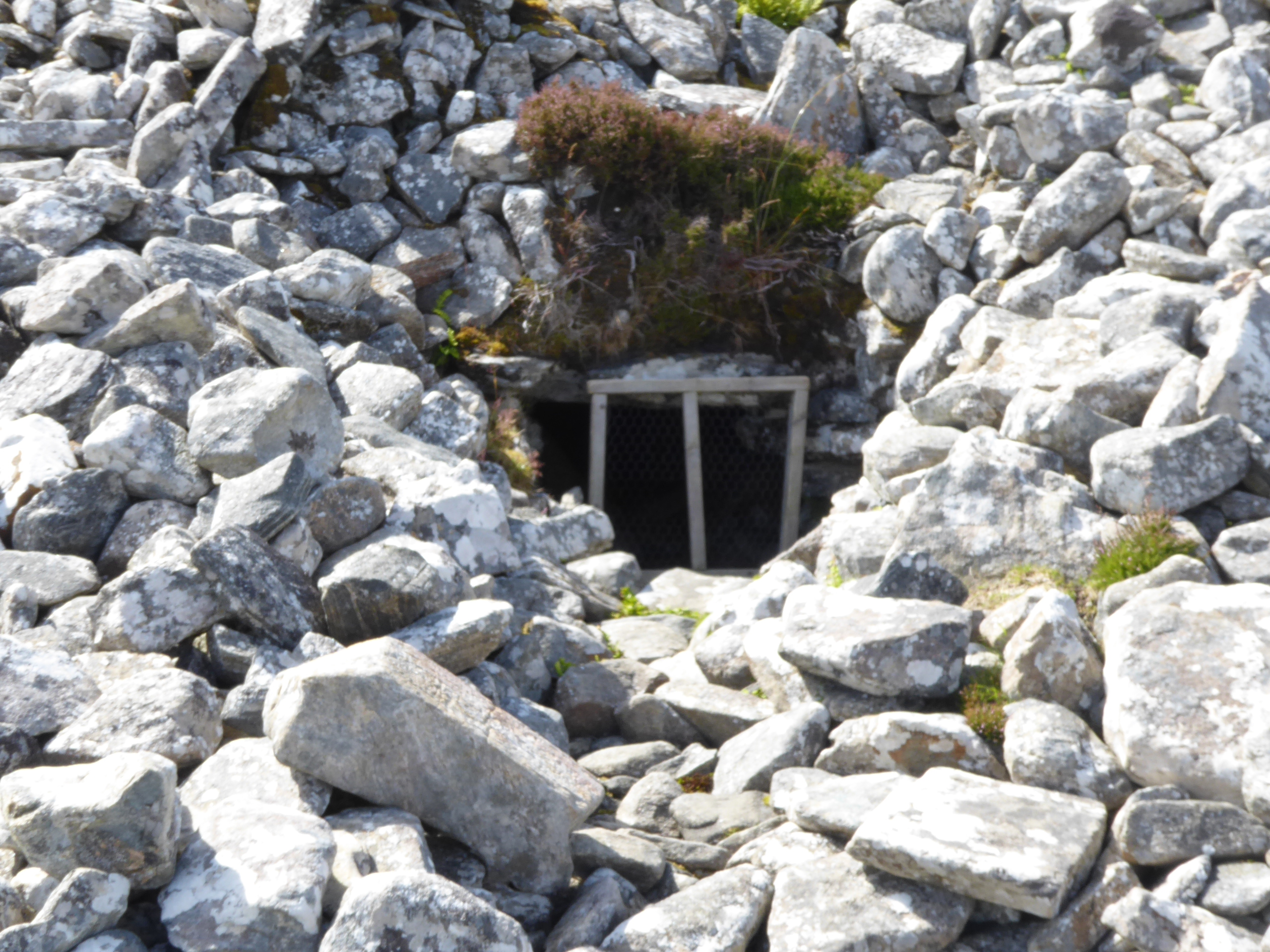
Although the central chamber has collapsed and it is not permitted to enter I was able to record a stone sound at the entrance which can be heard in the piece.
The piece is further characterised by static pauses which provide moments of repose. They represent large empty beaches, and on clear days views to the mountains and other islands beyond.
The stone percussion sounds (at times helping the ‘Cello timing) were recorded on beaches in the locale and one sound of particular significance was recorded at the entrance to the Bharpa Langass neolithic cairn on North Uist. This building, a communal tribal resting place of great ritual and ceremonial focus was thought to have been used continually for 1,000 years and is probably the oldest standing building in Northern Europe which for me gives the piece an added sense of timelessness and continuity.
A saying from South Uist:
‘Eat bread and weave grass, and then this year shall be as thou wast last year’
As Madeleine Bunting says in her excellent book ‘Love of Country’ (A Hebridean journey), Gaelic has a different sense of time, purpose and achievement. The ideal is to maintain an equilibrium.
The piece has emerged as a kind of ‘cello Idyll describing a picturesque and happy place. Sometimes the ‘cello is clearly a soloist but at other times blending with other textures. It is certainly not a show piece but written for an intermediate level performer. The piece can be performed with the film but hopefully would be similarly successful if performed with the prerecorded audio.