This is an early piano work by the composer who I much admire. I love the arpeggiated extended chords and the shifting time signatures.
CHILDREN’S SONG NO.6 (1971) by Chick Corea
This is the first recording in a larger Chick Corea ‘Children’s songs’ project. I love the combination of folk melody meets jazz in these pieces. As the composer says they lend themselves nicely to expansion which is why I include a little improvising as a coda to the piece.
Composition for keyboard, cello and electronics inspired by a Dawn visit to Water, East Yorks.
After the first lockdown (May 2020) I decided to go to Warter , East Yorkshire to experience a dawn chorus. The place has long been a favourite of mine for walking. (If you go to the local church, which is the Wolds heritage centre, there are maps available for all the local walks). I could not think of a better place to be in nature, and it was a necessary balm for me at that time. It’s odd that after prolonged isolation some seek the quiet of nature. I think it’s possibly to do with the fact that although our (normal) time and schedules have been disrupted, nature has just been getting on with things as usual and we find that comforting.
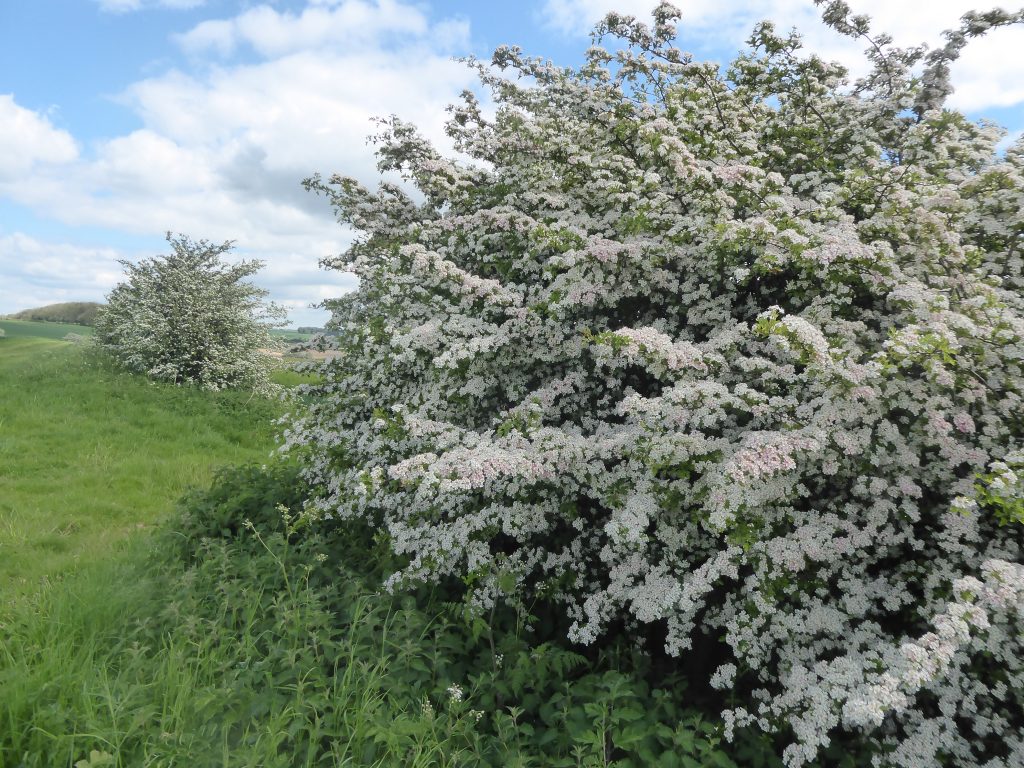
Hawthorn blossom above in Dale above Warter, East Yorks
I filmed and recorded from 4.30am- 6.30 in various locations and realised subsequently that this gave me interesting points of reference for a piece of music.
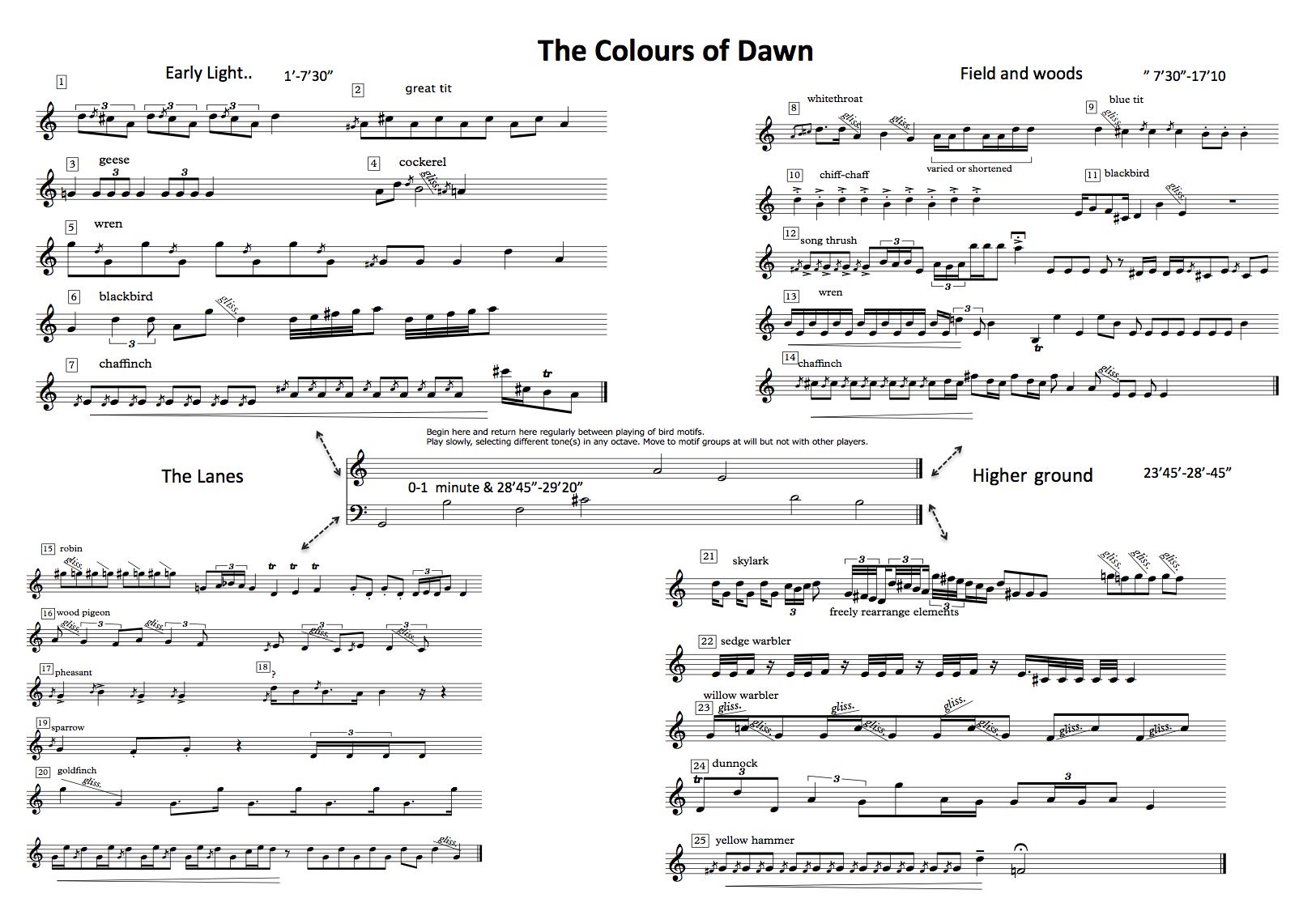
I analysed the recordings and initially decided to create a piece around transcriptions of bird song I made from my recordings, although modified to conform to a scale (Lydian on G). I created a score rather in the manner of Terry Riley’s’ ‘in C’ for any number of players, though in my case any number of recordings with my ‘cello as the only instrument. I intended to electronically modify the lines to create added interest . However, I quickly became dissatisfied with this and the score became more of an aide memoir:
I decided to improvise on the ideas with my Nord piano keyboard and found that I could capture different moods for parts of the film using the same scale but breaking the ‘rule’ towards the end of the piece. This worked nicely with the gradually increasing light (and sun) I experienced with all tones heard only in the final part of the film, representing the full risen sun of the higher ground above Warter (accompanied by the mad chatter of sedge warblers etc)
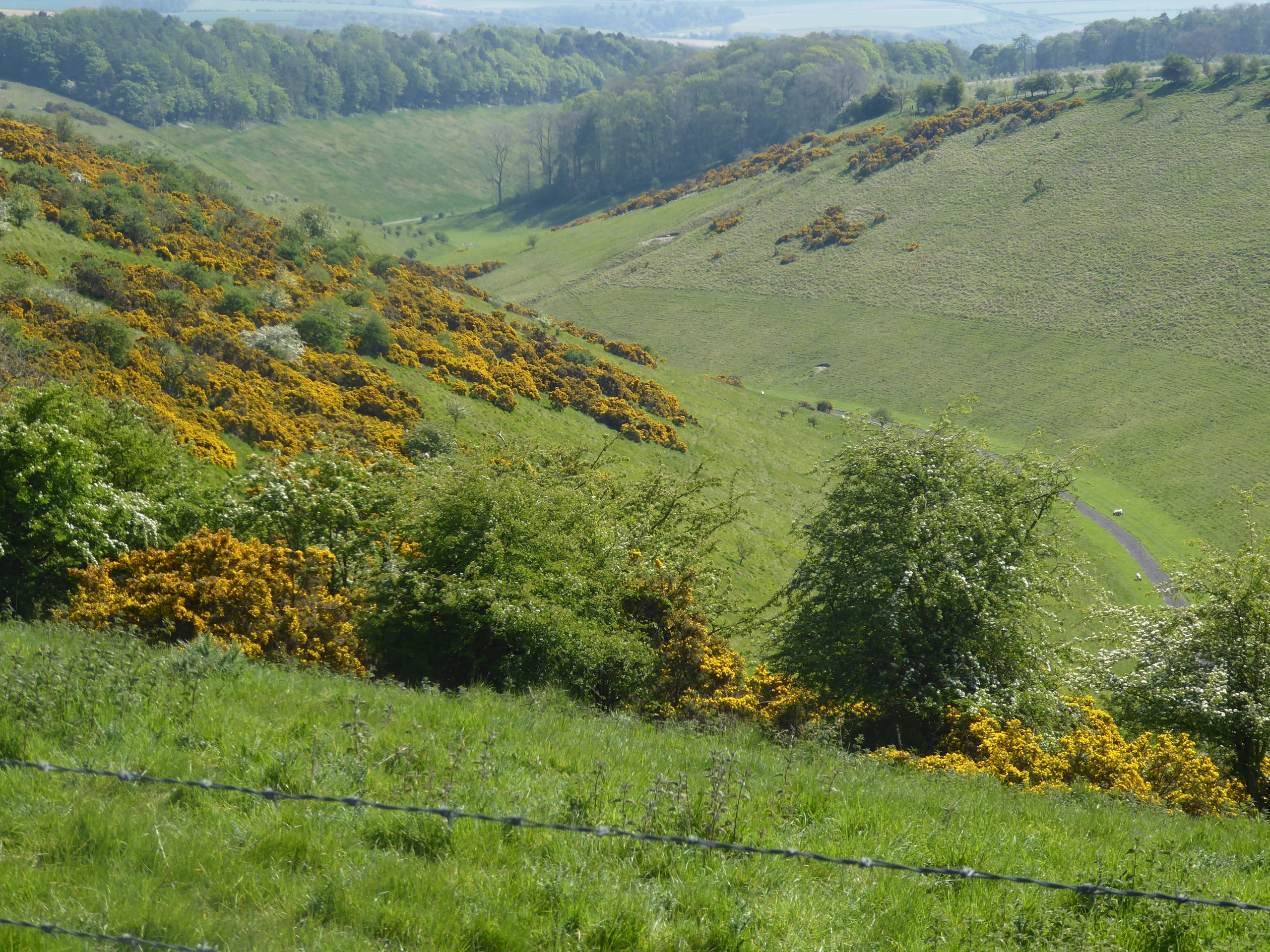
Gorse bushes in flower, Warter, East yorks
I then went back to the ‘cello ‘birds’ and recorded complimentary bird motifs. These I then modified electronically to create hopefully interesting colours musically and to further expand the expressive capacity of the cello and to suggest different birds and avian characteristics.
The resulting piece now has a clear structure complimenting the film as follows;
Cellos introduction (tones from the scale and trills)
Early light- the first bird calls, some near and some distant.
Sunrise in the lane- more energetic including a ‘trio’ of keyboard, ‘cello and blackbird.
View over fields- a brief section complimenting a more open misty landscape
In the woods- a more mysterious section leading to music for a ‘Hockney tunnel’ with emerging sun followed by music by a stream.
The Lanes- A more rhythmic section, minimalist in style leading to raucous sparrow chatter.
Higher Ground- A folk-like theme emerges with rhythmic bird chatter (sedge warblers) in cellos etc.
Closing cellos (modified from introduction)
The music in general compliments increasing light and bird activity culminating in full sunlight on the hills around Warter with sedge warblers, larks, dunnocks etc. The treatment of the ‘cello ‘birds’ in particular reflect my emotional response to the changing environments.
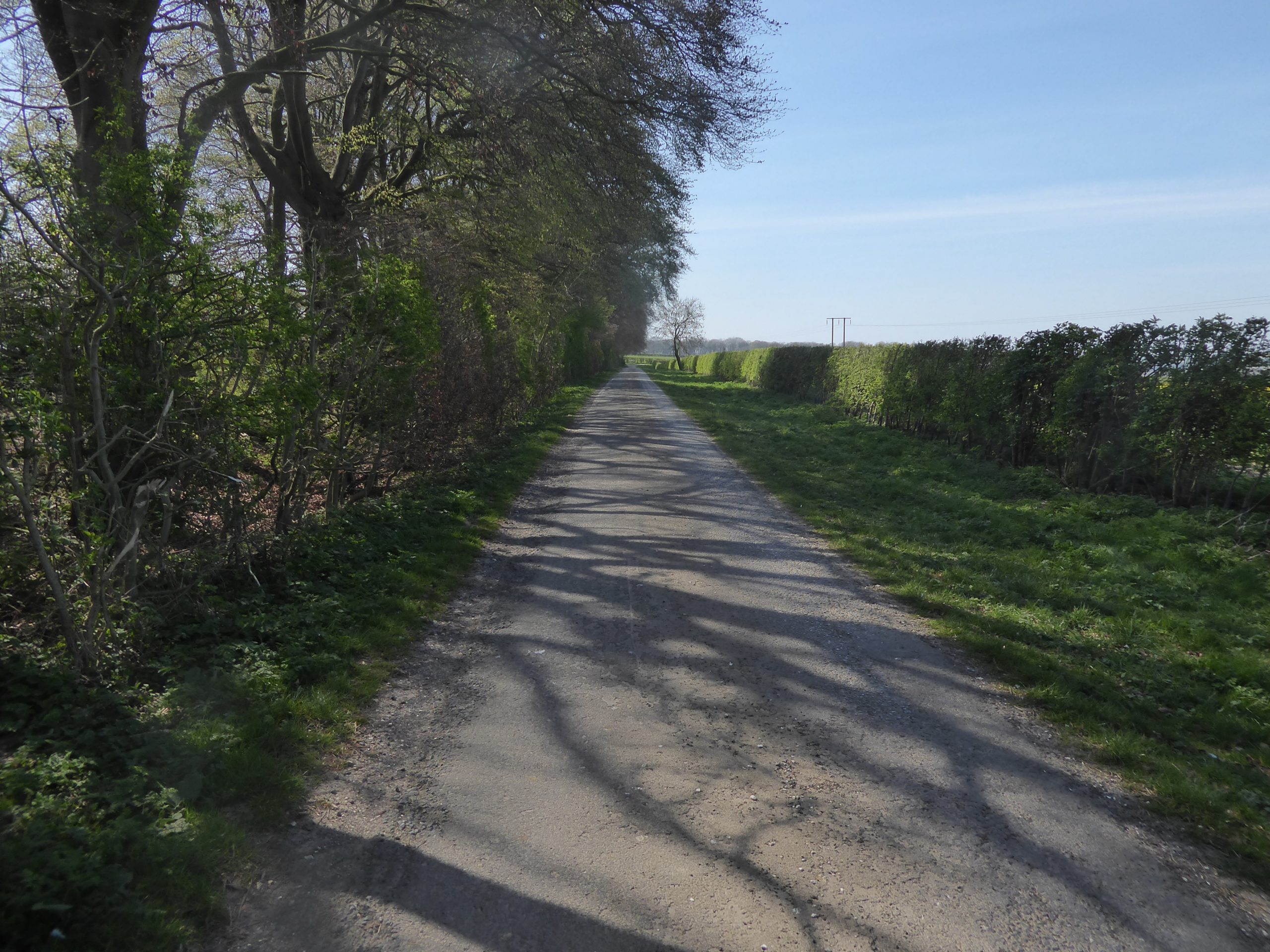
..shadows in lane and trees painted as ‘Bigger trees’ by David Hockney
I have been particularly concerned with balance throughout the piece. I wanted to oppose the increasing bird activity with a calm lyrical piano part (suggesting the calming effect of the experience). I was recently asked why I did not concentrate on recording the ‘cello naturally rather than manipulating the ‘cello sound. My answer is that I wanted to create differences between the ‘bird’ motifs used and I thought this would not be quite as effective if the multiple recordings were just conventional ‘cello sounds.
The film I made documents the changing light throughout from early light to full sun and I have enhanced this by adding slow moving colour transitions. It is a film without any other drama and it was suggested I focus on colour changes to provide an interesting narrative which I hope I have done, at least contextualises the recorded bird audio.
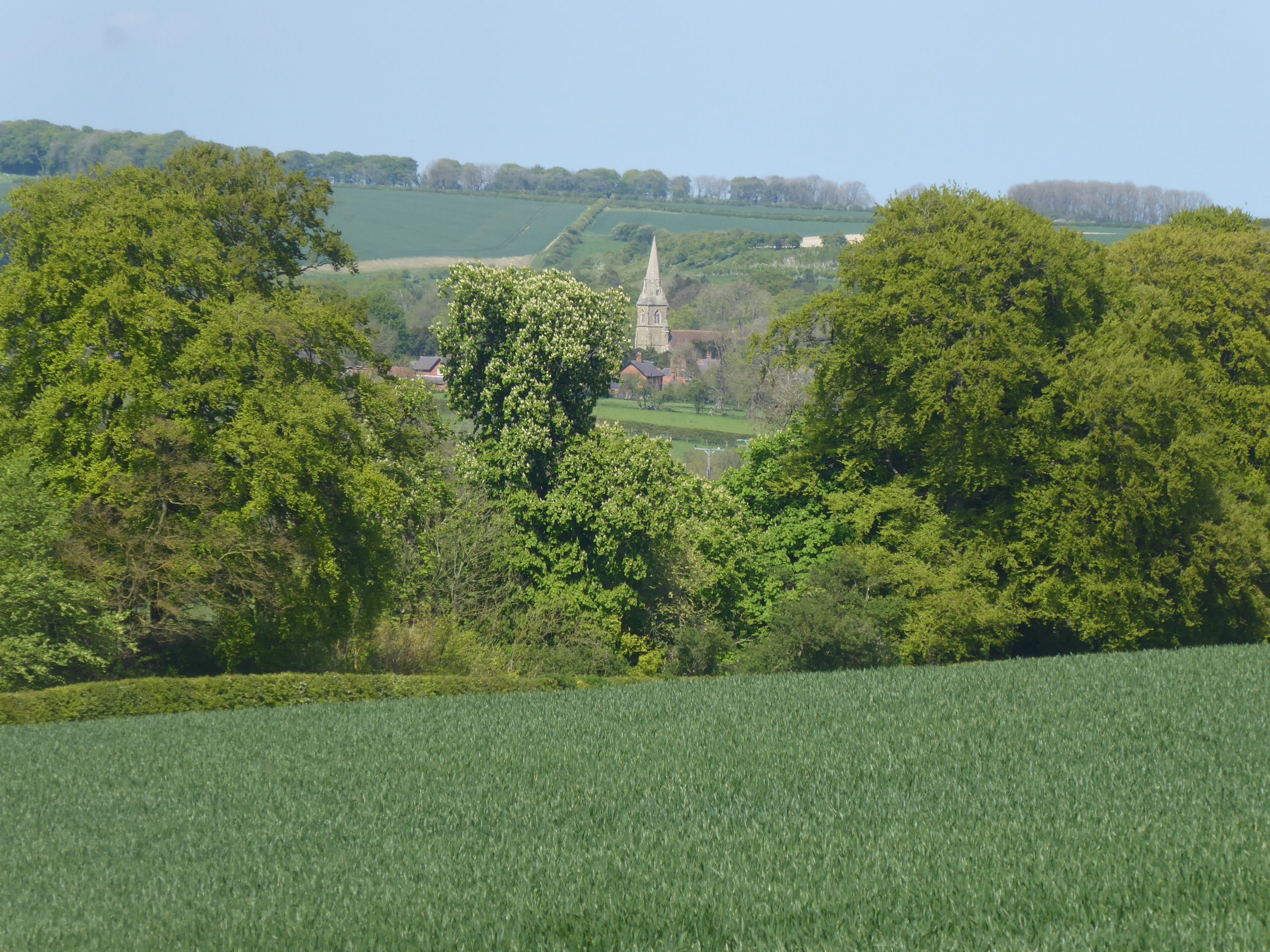
Warter Church (Wolds Heritage Centre)
Finally, the ‘Colours at Dawn’ is the first part of a larger ‘Warter Walks’ project. Part 2 will be a short acousmatic composition leading to a solo piano piece. The final part will be 3 pieces for choir based on local folk songs.
I can do no better than conclude with a quote from Steven Lovatt;
“Finally, the Earth could hear itself think, and the voice of its thought was birdsong. A year on, we’re still too close to it to tell which stories and emotions will survive from that strangest of times. But it also seemed possible, even in the grimmest days, that the spring of 2020 might be remembered differently – as the time when we first heard the birds and, hearing them, began to recover an appreciation of something universal we had somehow mislaid.”
One of the few nice things to emerge re the Covid19 crisis has been reconnecting with my friend and former band member Joe Martin who is now a prize winning and much sought-after fiddle player in London. ‘Moonglow’ is a laid back jazz Classic and I love the soulful feel especially Joe’s interjected violin phrases.
The ‘cello bass line was developed by Joe from the Stephan Grappelli version of the song and I have, apart from my solo, attempted a gentle vamp style which works especially in the absence of a bass. I want to continue exploring the ‘cello in this musical world and am much influenced by Yo-Yo Ma in this though my efforts more modest.
In response to a request for musicians to play ‘Over the Rainbow’ last week as a tribute to our brave NHS staff and carers in this health crisis I created my own studio version.
I was particularly struck by the fact that ‘Over the Rainbow’ despite being loved as a jazz theme, does not lend itself particularly to jazz. This suited the ‘cello, so with a few additions it plays the theme straight, allowing the piano to improvise around it.
Here is a short video containing clips of my own work and performances featured in the concert in November last year. Due to a camera malfunction there is no close footage of ‘Shades of Blue-Green’, however I was pleased with the performance and the audience reaction. The atmosphere of the ‘Kardomah’ with comfortable armchairs is a unique concert experience, not quite like the beds in Max Richter’s ‘Sleep’ but not far off!
I was pleased also with the Tanaka work performances in particular ‘Water Dances’ movement III and would now very much like to learn the other movements for a future performance.
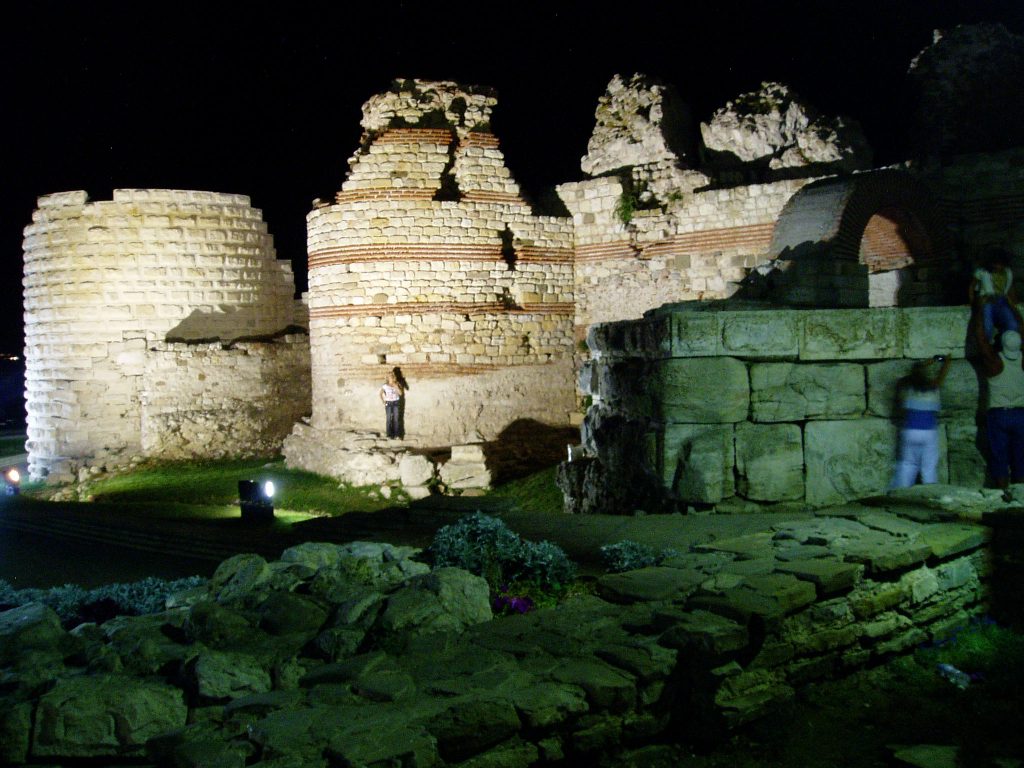
At the Gates of Old Nessebar (2019) for piano and preprepared track
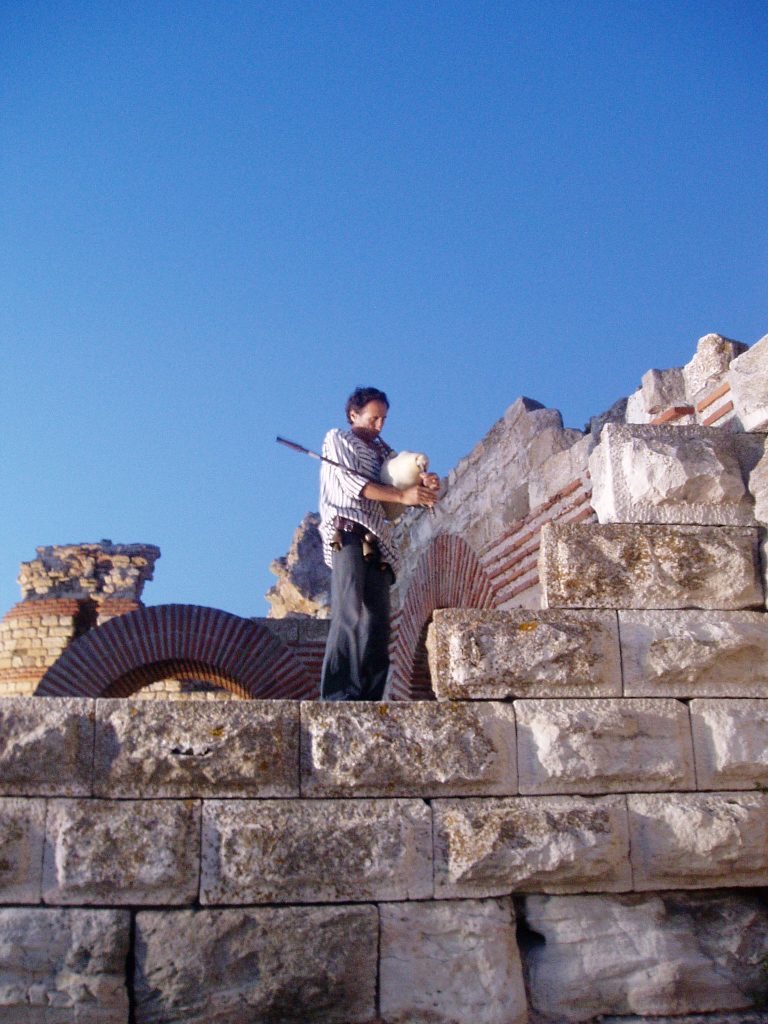
In this piece sounds from the priests and congregation in the Eastern Orthodox church can be heard. Also cicadas and the unforgettable sound of the Bulgarian pipers who herald your entrance to the city.
OLYMPUS DIGITAL CAMERA
These sounds inspired the piano writing which mirrors and expands phrases heard in the church service, at times using a quasi-improvisational approach.
In this revised version the piano was played live on my Nord piano 3 using a few different programs to compliment the aforementioned sounds.
Listening now years later it seems like a little Electro-acoustic piano prelude.
I have added some multi tracked ‘cello sounds and additional percussion to enable the performer to play the piece live.
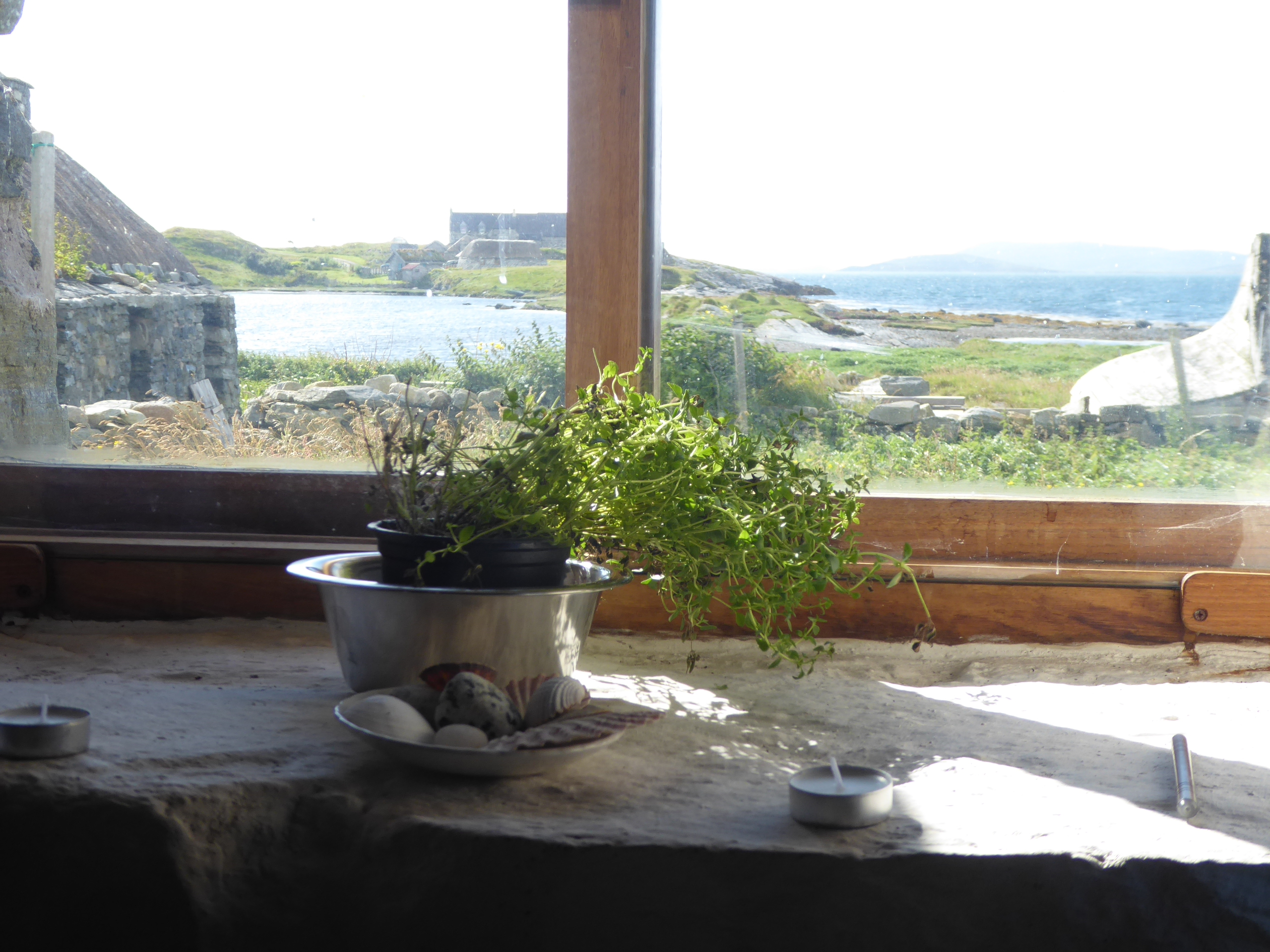
I composed sketches for the work whilst on holiday in Bernaray and North Uist with my wife Jacqui in 2017. As can be seen in the film we were staying in a blackhouse on the edges of the Bays loch which provided inspiration and peace to compose.
One of the most striking features of a holiday in the Outer Hebrides is the quickly changing skies, colours and weather. I wanted to write a piece which featured the intertwining of musical textures which increase in complexity before ebbing away to a final drone.
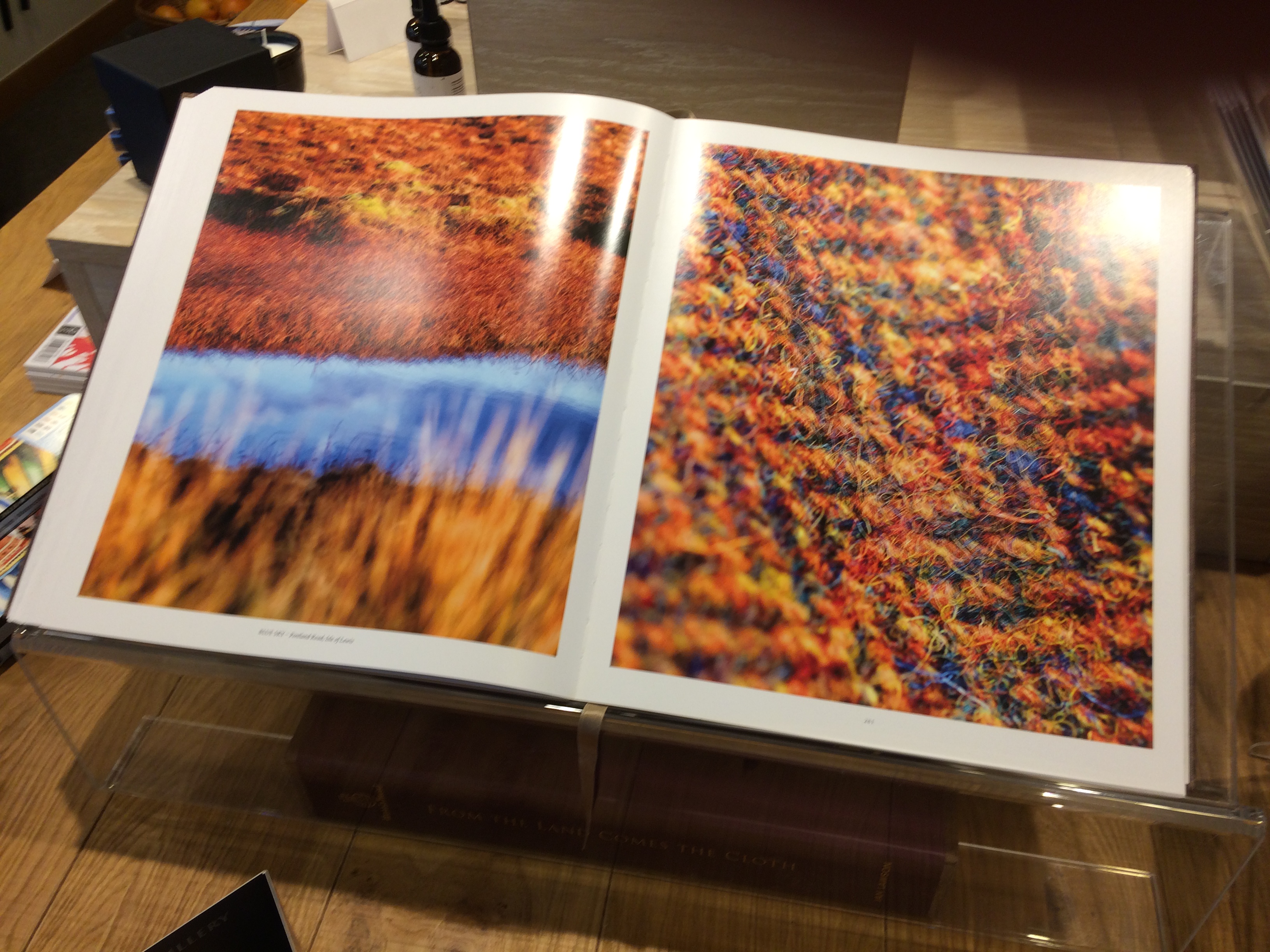
I was inspired by a page in a book about the Scottish tweed industry. It is interesting that the colours in a particular tweed closely resemble the colours of the local landscape. The photo isn’t good but it makes the point. The colours of water, rocks, seaweed, grasses of the landscape are woven into the tweed.
There are 3 main layers in ‘Shades of Blue-Green’ representing fast movement (wind across water and grasses and quickly changing sky colours), a slower movement of light across mountains and hills, and an ever-present song of the Gaelic community as represented by the solo ‘cello. The slower evolving light I have chosen to be represented by a drone created by recording a ‘cello with a transducer microphone.
These elements intertwine throughout, and in the final part of the piece the song becomes actual quoting from ‘Tha Bo Dhubh Agam’ (‘Yesterday’) which is a traditional North Uist song. This is initially heard within the texture gradually becoming revealed as the musical lines diminish to a final drone.
The piece is further characterised by static pauses which provide moments of repose. They represent large empty beaches, and on clear days views to the mountains and other islands beyond.
The stone percussion sounds (at times helping the ‘Cello timing) were recorded on beaches in the locale and one sound of particular significance was recorded at the entrance to the Bharpa Langass neolithic cairn on North Uist. This building, a communal tribal resting place of great ritual and ceremonial focus was thought to have been used continually for 1,000 years and is probably the oldest standing building in Northern Europe which for me gives the piece an added sense of timelessness and continuity.
Although the central chamber has collapsed and it is not permitted to enter I was able to record a stone sound at the entrance which can be heard in the piece.
A saying from South Uist:
‘Eat bread and weave grass, and then this year shall be as thou wast last year’
As Madeleine Bunting says in her excellent book ‘Love of Country’ (A Hebridean journey), Gaelic has a different sense of time, purpose and achievement. The ideal is to maintain an equilibrium.
The piece has emerged as a kind of ‘cello Idyll describing a picturesque and happy place. Sometimes the ‘cello is clearly a soloist but at other times blending with other textures. It is certainly not a show piece but written for an intermediate level performer. The piece can be performed with the film but hopefully would be similarly successful if performed with the prerecorded audio.