
These pieces were inspired by 5 standout memories of Stronsay. A small island reached by a boat from the Orkney mainland with a population of under 300. I felt really close to nature here and inspired by its sounds and colours.
I decided to incorporate a few images and video into my performance of these pieces.
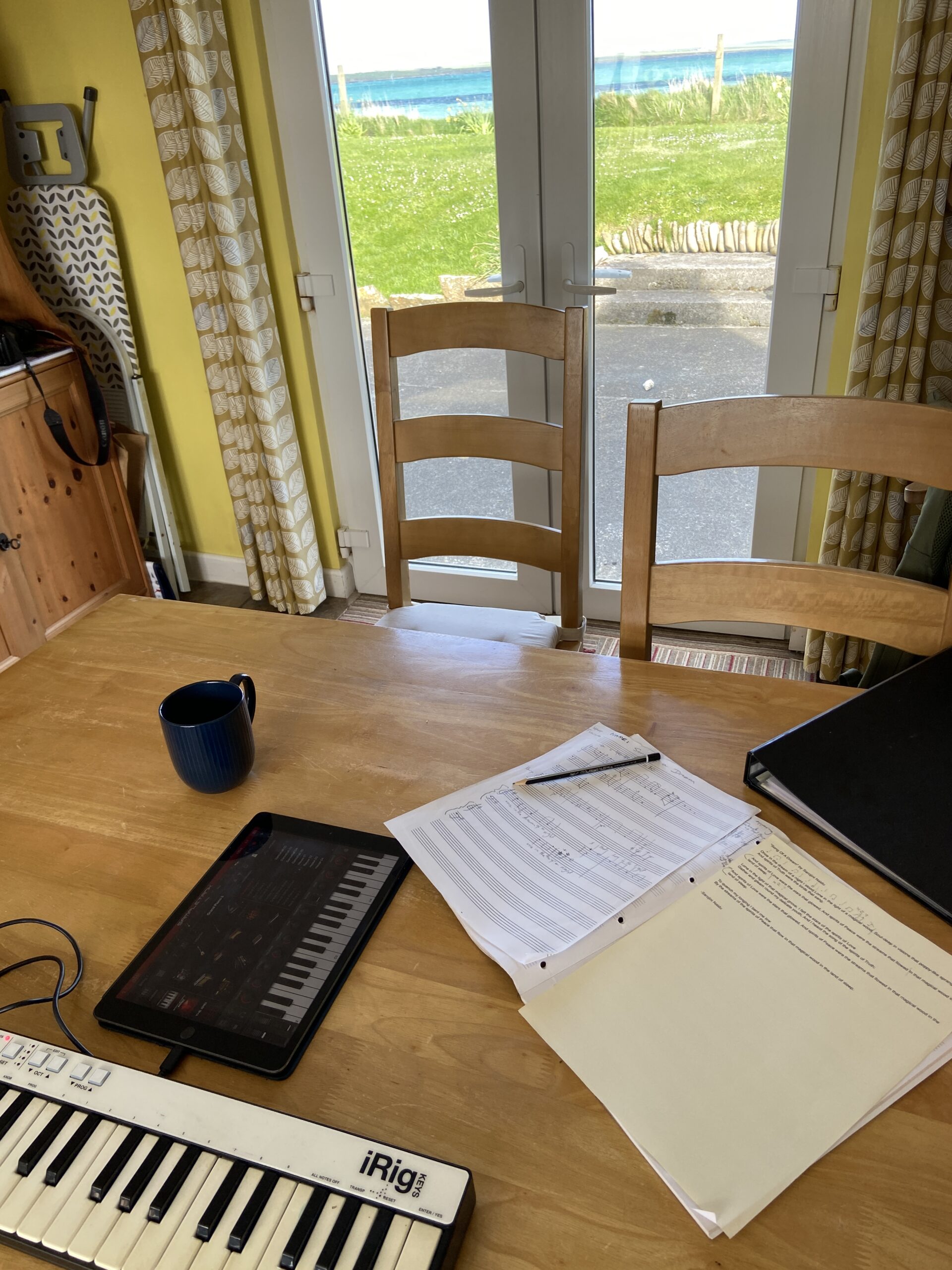
The sketches for the work were made at our holiday cottage looking out to Rothiesholm bay and the sea. A wonderful place to reflect on changing light and colour.
The pieces in the set are:
I: Shells and stones.
II: Seals
III: Folk
IV: Loon
V: Colours, light and water
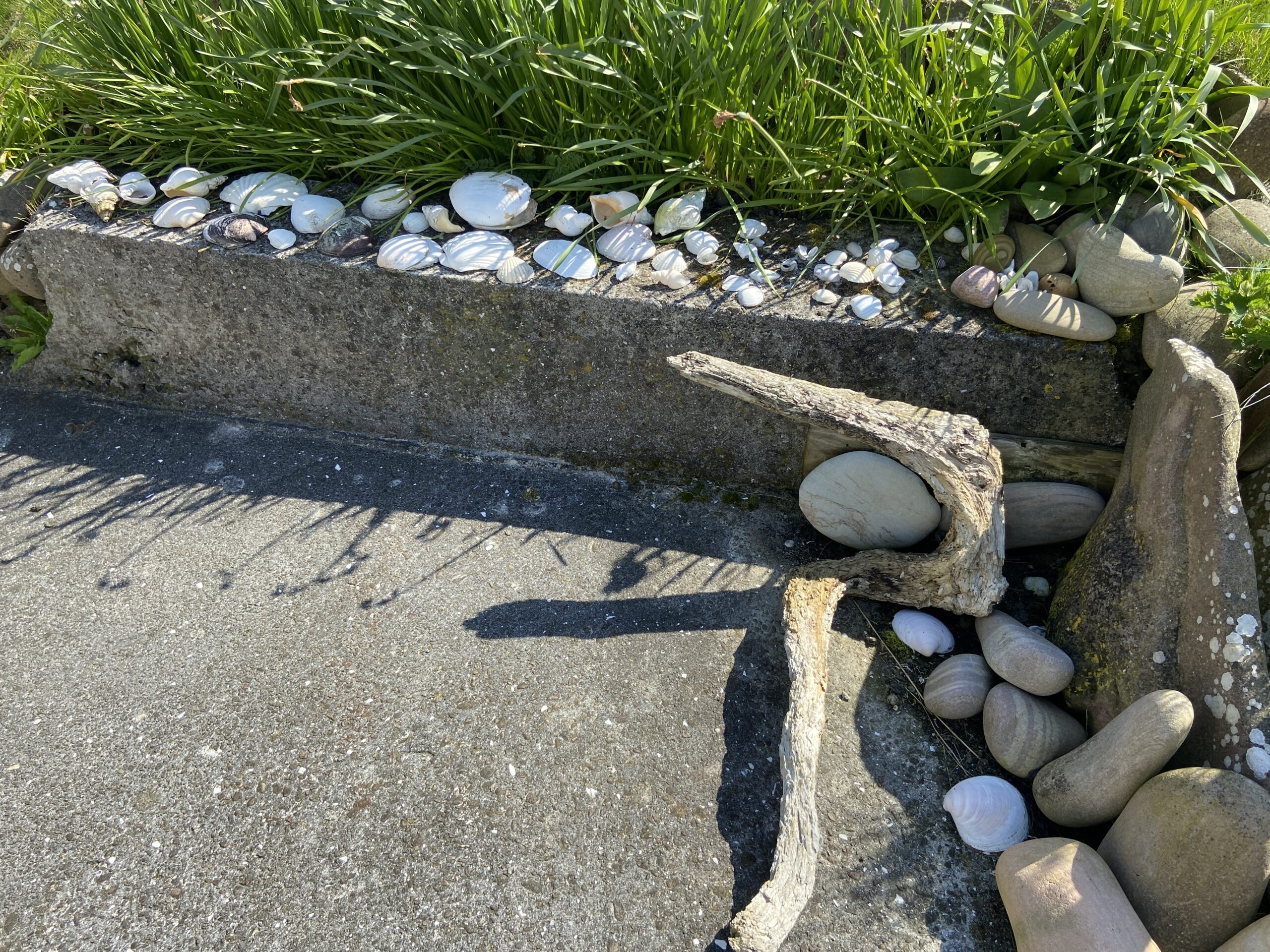
1: The grooves on coco shells (artica islandica) indicate a year of life. This can be represented in music by adding single notes to form larger chords as per the Fibonacci series. This gave me idea for the opening bars.
I make use of harmonics which are created by holding notes and striking others rapidly. I use after I learnt and performed ’Piano Distance’ by Takemitsu which makes use of this technique. The piece gradually builds suggesting the wonderful abundance of shells and coloured stones in Rothiesholm bay.
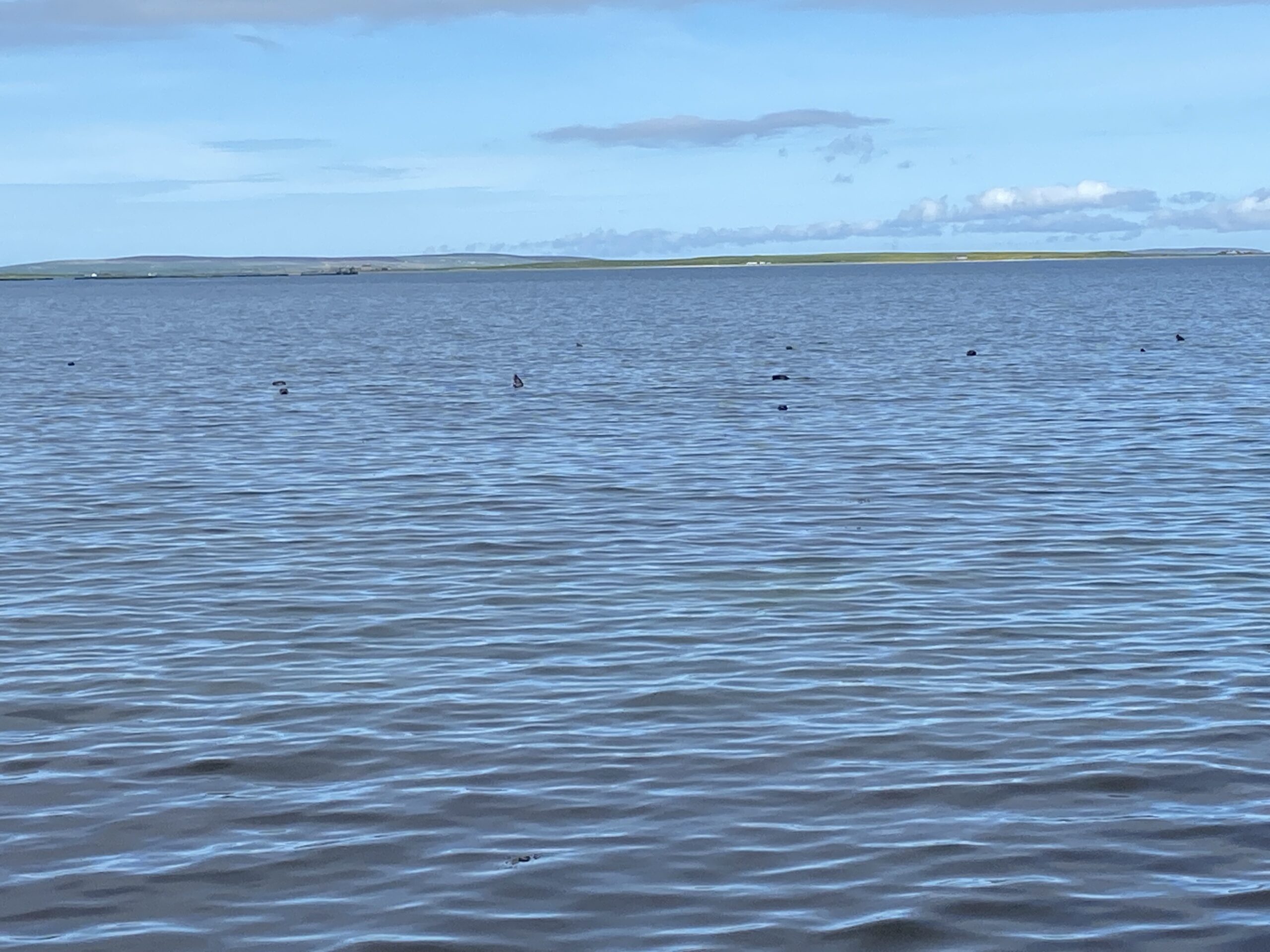
II: Piece is inspired by an ‘encounter’ with seals. Their swimming action, appearance, curiosity are represented and I include a touch of selchie reverence with Ludwig Koch’s seal’s cry motif transcribed by Francis Collinson appearing as a second idea. The calm sea and depth is represented by a rippling texture played as left hand tremolandi.
We observed the seals in St. Catherine’s bay on Stronsay. The seal heads appear, few at first, becoming more numerous before disappearing in the depths, leaving the gentle flat water and an imagined distant cry.
III: This music takes idiomatic folk rhythmic ideas and treats them in a more complex harmonic and tonal framework with a nod to Stravinsky. I was inspired by an Orkney traditional music workshop held in the Stronsay hotel in Whitehall,where an interesting cacophony was produced with all rehearsing individual phrases before playing the piece collectively. As a humorous response to this, the piece becomes increasingly chaotic before finishing with the opening phrase of the tune.
IV:The scene is a bay (Rothiesholm sand) at approaching dusk. There is the constant distant wave sounds and ‘lonely’ bird cries in the dark. Particularly the Great Northern diver haunting calls. (Know in North America as a loon). Careful pedalling is required to produce distant replying bird calls.
Rhythms of bird calls are evident, but I’m not trying to transcribe the song, but rather try to create evocative gestures.
V: One of the most appealing features of Stronsay, particularly as it often so devoid of humanity, are layers of colours created by sky, sea, rocks and sand which appear without distraction. (This is also true of places in the Outer Hebrides we have been to.)
The idea here is to create layers of superimposed sound ideas inspired by the water’s edge, small wave movements right to left, and the immense variety in the water colour: Light brown and lighter blue to darker blue for the rocks then back to aqua marine. Interjecting birds. Floating up and bombing gannets, oyster catcher and curlew calls. I include fragments of Orkney tunes in the layers. Also the sky which is a constant, perhaps changing, but in a much slower movement.