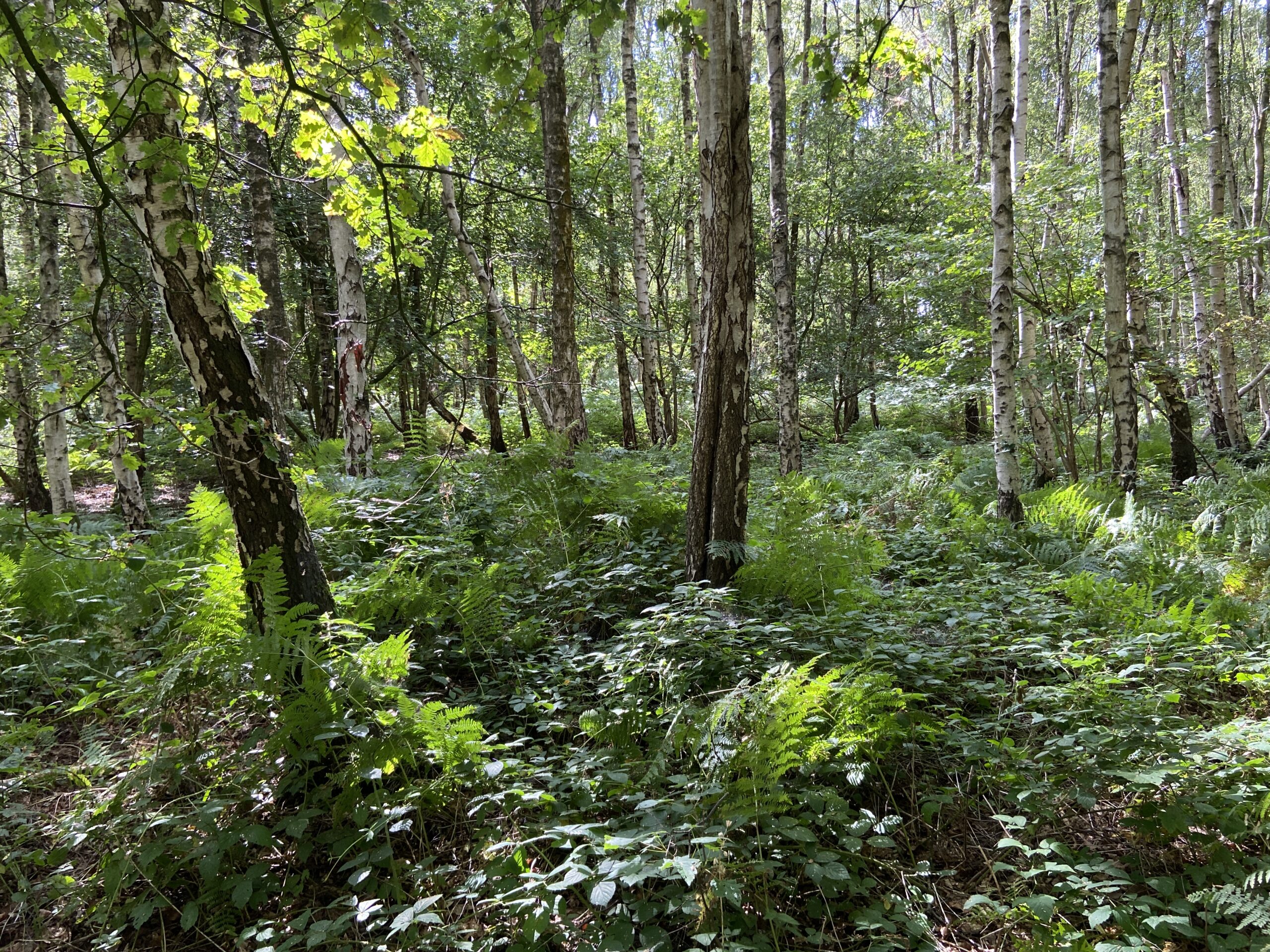
Sarojini Naidu’s “Song of a Dream” is a lyrical poem published in 1905 during a turbulent pre-Independent India. It explores an idealized world where abstract virtues—Truth (singing birds), Love (glowing stars), and Peace (flowing streams)—are embodied in a magical woodland, representing India as a harmonious land free from strife, reflecting Naidu’s longing for a just and peaceful nation amidst India’s freedom struggle. The poem uses rich imagery, personification, and a simple rhythm to create a spiritual escape, contrasting the dream’s serenity with real-world injustices, urging readers to cultivate these values.
It seems to me this metaphorical wood is just as relevant now in today’s world.
Rachel Davies (our choir Director) plays the Scottish Gaelic harp known as a Clarsach. The work features counter-melodic ideas and soft harp textures to accompany the choir, which I think suits the magical dream world of the poem, and I am very grateful for her help and playing.
The work was inspired by a recent trip to the Basilica de Sagrada Familia and the Fundacio Miro gallery in Barcelona.
As you enter the Basilica your eyes are drawn upwards following the columns of stone as they branch out (literally) and form a forest canopy . (Sometimes described as a ‘Mystic Forest’). The large windows representing dawn (mostly blues and greens) on one side, matched by the reds of the sunset on the other side of the transept fill the space with colour. Antoni Gaudi’s creation is truly awe inspiring and lifts your spirits and reminds us that God can talk to us through nature and in our contemplation of it.
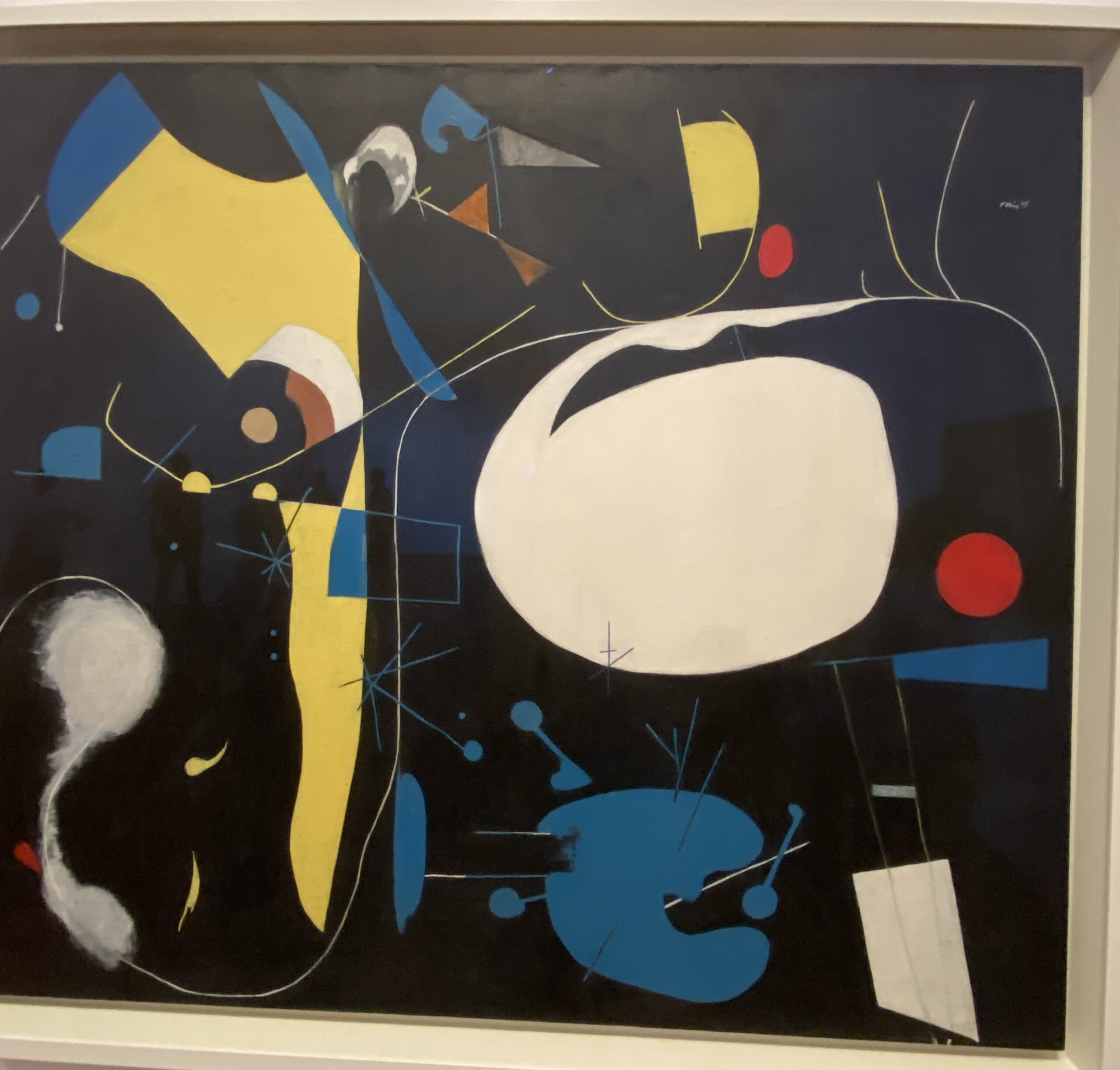
The day before we visited the Fundacio Juan Miro and I was absorbed by the colourful non-objective painting on show. A particular painting,inspired by Miro, by the American artist Perle Fine caught my eye. In ‘Polyphonic’ juxtaposed ideas in primary colours in a black space and are drawn together by a single thin line.
My work seeks to bring these 2 experiences together in sound. The continuous‘ cello line highlights the piano’s textured and coloured music. The only melody used is part of the Latin hymn ‘Veni creator spiritus’ which is represented in the choir railings in the basilica.
The music hopefully gives a feeling of space by using careful piano pedalling and slow movements in the instruments. The score (no bars or strict meter) allows the performers to define time between the instruments with synchronous movements only occasionally required. The ‘space’ created by the performers is further enhanced by a recording I made in the Basilica which drifts in and out during the performance of the score. The sound is EQ’d to take out or highlight frequencies within, adding to the perception of the acoustic environment.
In a world currently ravaged by war and destruction, it is moving to witness amazing human achievement now, in our time in the building of this magnificent cathedral.
These pieces were inspired by 5 standout memories of Stronsay. A small island reached by a boat from the Orkney mainland with a population of under 300. I felt really close to nature here and inspired by its sounds and colours.
I decided to incorporate a few images and video into my performance of these pieces.
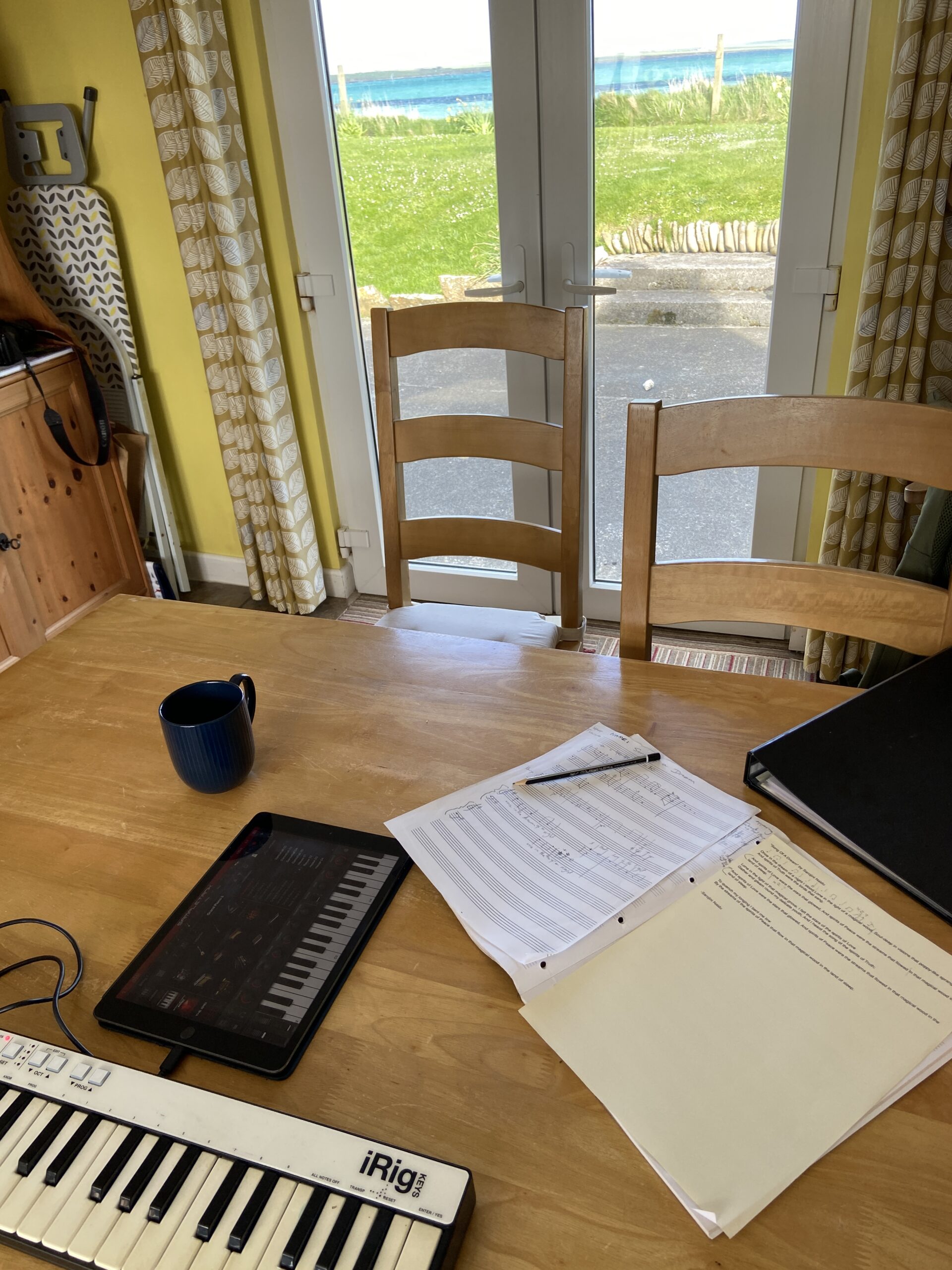
The sketches for the work were made at our holiday cottage looking out to Rothiesholm bay and the sea. A wonderful place to reflect on changing light and colour.
The pieces in the set are:
I: Shells and stones.
II: Seals
III: Folk
IV: Loon
V: Colours, light and water
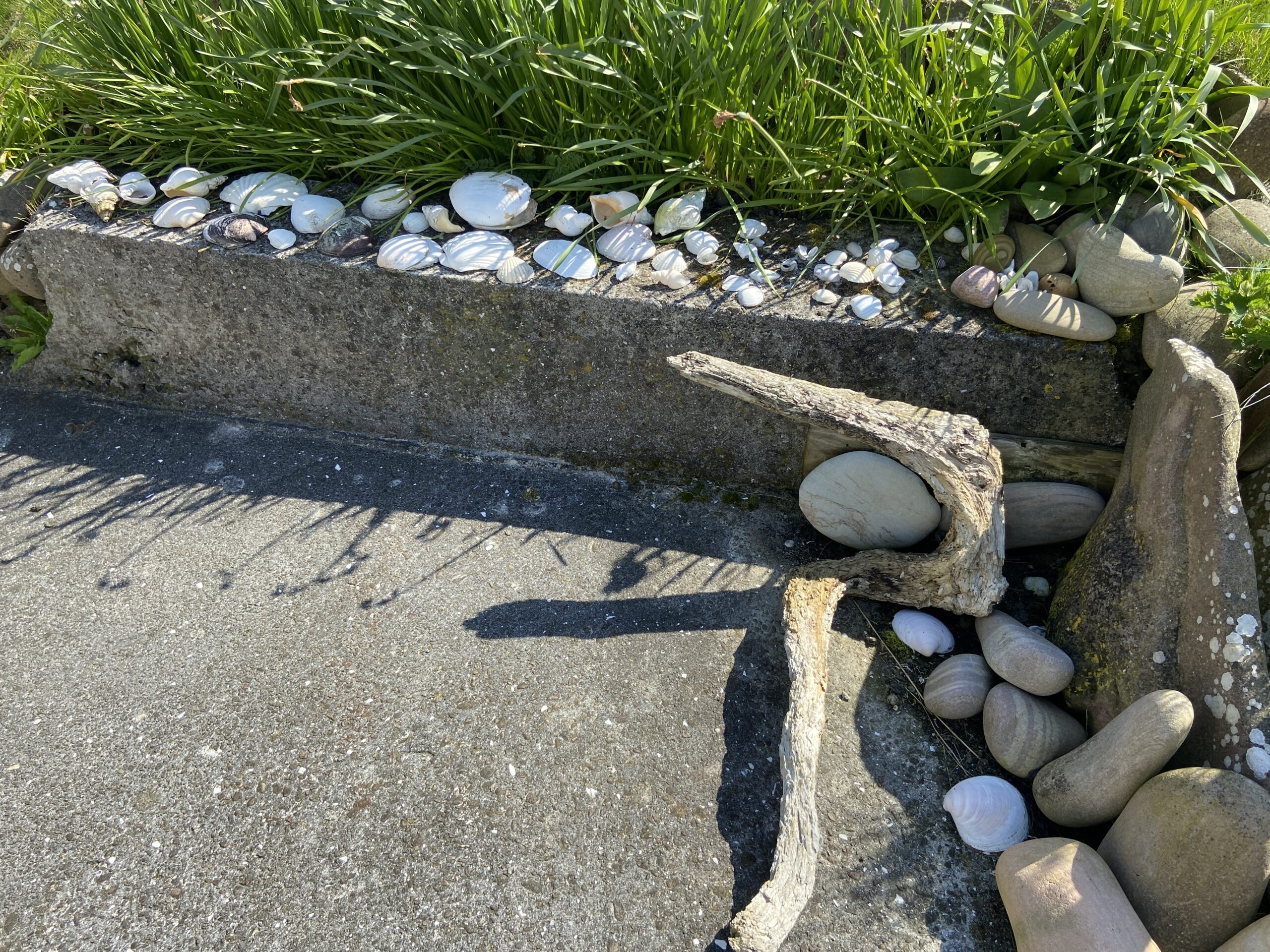
1: The grooves on coco shells (artica islandica) indicate a year of life. This can be represented in music by adding single notes to form larger chords as per the Fibonacci series. This gave me idea for the opening bars.
I make use of harmonics which are created by holding notes and striking others rapidly. I use after I learnt and performed ’Piano Distance’ by Takemitsu which makes use of this technique. The piece gradually builds suggesting the wonderful abundance of shells and coloured stones in Rothiesholm bay.
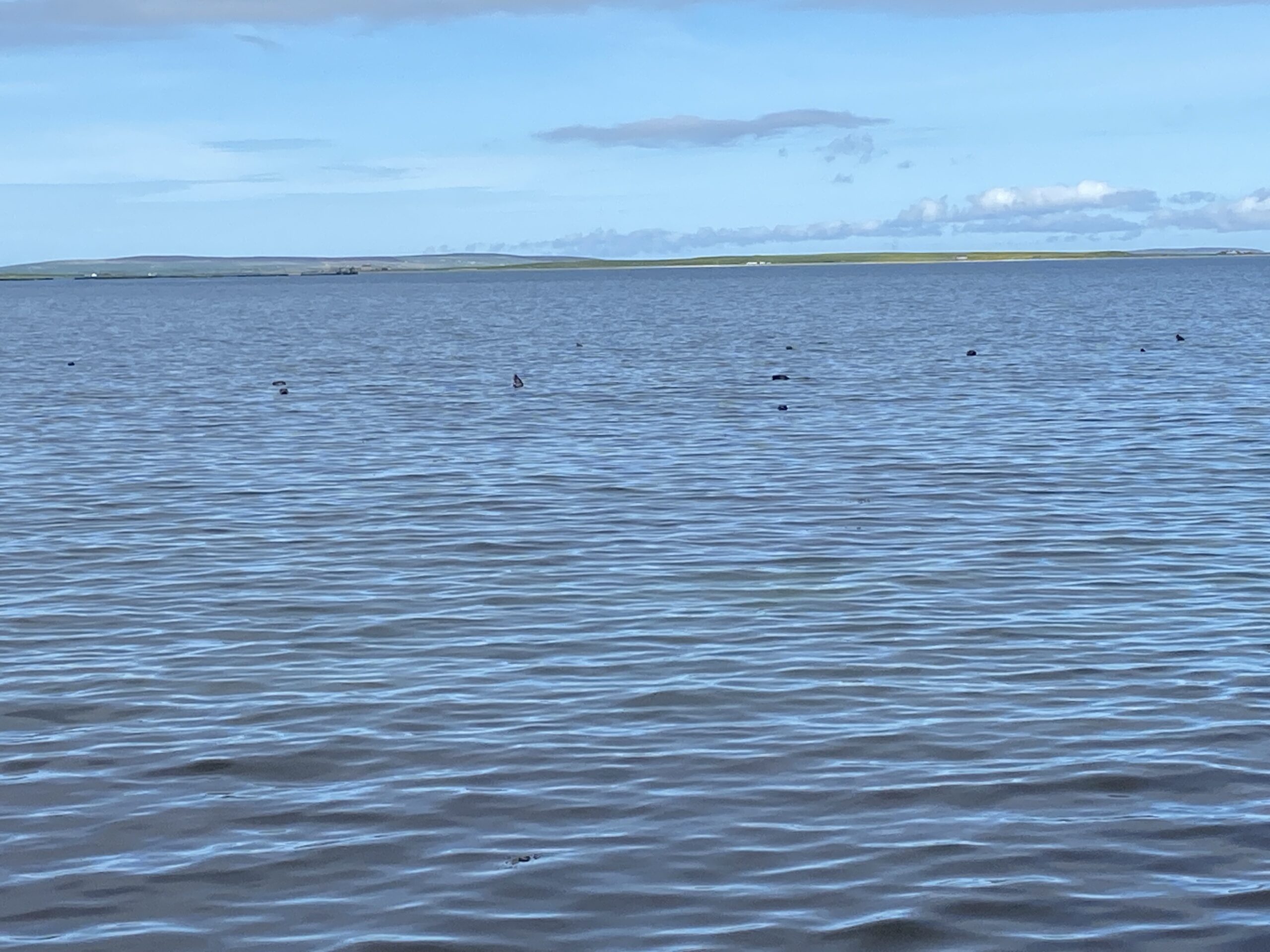
II: Piece is inspired by an ‘encounter’ with seals. Their swimming action, appearance, curiosity are represented and I include a touch of selchie reverence with Ludwig Koch’s seal’s cry motif transcribed by Francis Collinson appearing as a second idea. The calm sea and depth is represented by a rippling texture played as left hand tremolandi.
We observed the seals in St. Catherine’s bay on Stronsay. The seal heads appear, few at first, becoming more numerous before disappearing in the depths, leaving the gentle flat water and an imagined distant cry.
III: This music takes idiomatic folk rhythmic ideas and treats them in a more complex harmonic and tonal framework with a nod to Stravinsky. I was inspired by an Orkney traditional music workshop held in the Stronsay hotel in Whitehall,where an interesting cacophony was produced with all rehearsing individual phrases before playing the piece collectively. As a humorous response to this, the piece becomes increasingly chaotic before finishing with the opening phrase of the tune.
IV:The scene is a bay (Rothiesholm sand) at approaching dusk. There is the constant distant wave sounds and ‘lonely’ bird cries in the dark. Particularly the Great Northern diver haunting calls. (Know in North America as a loon). Careful pedalling is required to produce distant replying bird calls.
Rhythms of bird calls are evident, but I’m not trying to transcribe the song, but rather try to create evocative gestures.
V: One of the most appealing features of Stronsay, particularly as it often so devoid of humanity, are layers of colours created by sky, sea, rocks and sand which appear without distraction. (This is also true of places in the Outer Hebrides we have been to.)
The idea here is to create layers of superimposed sound ideas inspired by the water’s edge, small wave movements right to left, and the immense variety in the water colour: Light brown and lighter blue to darker blue for the rocks then back to aqua marine. Interjecting birds. Floating up and bombing gannets, oyster catcher and curlew calls. I include fragments of Orkney tunes in the layers. Also the sky which is a constant, perhaps changing, but in a much slower movement.
This is a setting of a beautiful and stirring poem by Robert Macfarlane. Written in 2018 at the time of the Sheffield tree cutting protests and for the protesters, he encouraged it to be set to music as part of the campaign. Recent events regarding the felling of the Sycamore gap tree has further added to the emotional content of these words. The poem gives voice to a tree and asks us to consider their relevance in our lives.
Musically I wanted to create a strong dialogue between the piano, and the choir with soprano soloist.
There are broadly 3 sections, the first characterised by a motif for the tree asking us to be aware of its (rising) sap and heartwood as perhaps human-like equivalents. I use a lot of dynamic contrast to bring the tree ‘voices’ near and far away as in a wood perhaps.
The second more lyrical section entreats us to consider the importance of trees, but this is interrupted with a more dramatic section and sudden key change; ‘I hear the roaring engines thrum, but I cannot run’. The final section is a reprise of the first section (in part) but there are more subdivided voices representing the thankfully still numerous trees.
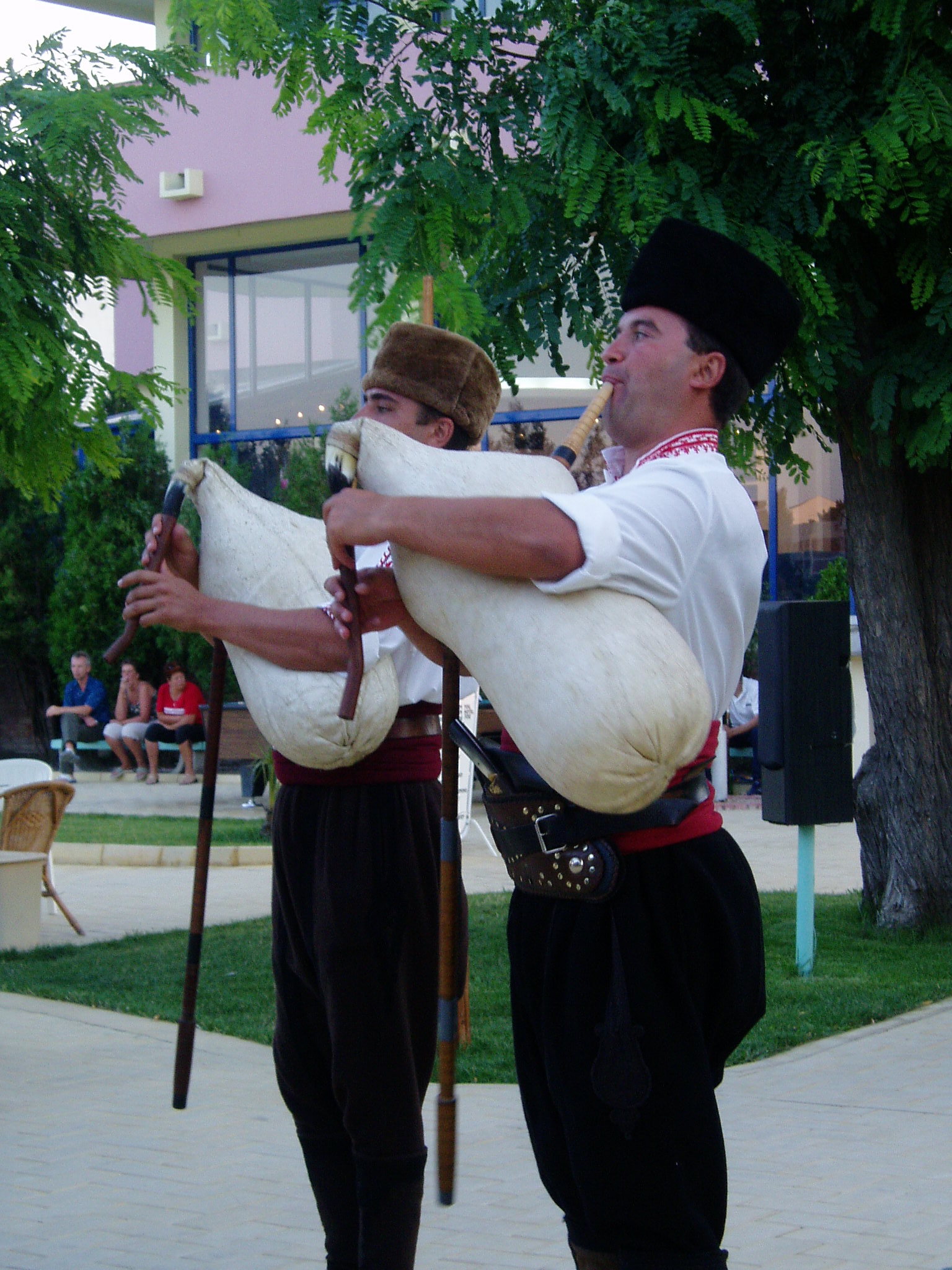
Originally written as a studio composition in 2004 after a holiday in Nessebar, Bulgaria. It was titled ‘At the Gates of Nessebar’ with reference to the piper who plays standing on the ruined walls to the Old town. as people enter the town.
It is here rescored and amended for live solo piano (and electronics), as I have always thought it would be fascinating in live performance, with the bells sounds in particular enhancing the piano writing. The audio includes sounds from a Greek Orthodox church service which I attended, crickets, and a piper on the walls as aforementioned.
The piece is a kind of piano Fantasy in 2 sections; the first features the sonorous church bell outside Nessebar St. Stephen’s church (11th century Byzantine architecture). Now a museum since my visit, but restored, especially the lovely wall paintings.
The second section features a fast-moving figure alternating between the hands, and chords which augment the sounds of voices and bells in the church service. I was struck and inspired by the play of light on the stonework in an otherwise dark and mysterious environment.
Amongst other innovations the instrument allows compositions for piano and electronics to playback prerecorded material from computer (via transducers) to the piano, employing the piano soundboard and resonances in the piano. The result is to hear the sounds plus the live piano, in a truly integrated way.
I recently went to the Royal Academy in London to hear the piano, and as an ‘extended’ instrument for small concert venue it is for me an exciting development.
However, as access to these pianos is very limited (currently only one in, the UK) this piece can also be played using a pair of small desktop speakers either in or as near to the piano as possible.
I have recently performed music by Federico Mompou (his Fetes Lointaines) and I particularly like the duality of ideas in some of the pieces.So for example recreated bells are followed by a lively children’s song-like idea recalling aspects of the fetes.
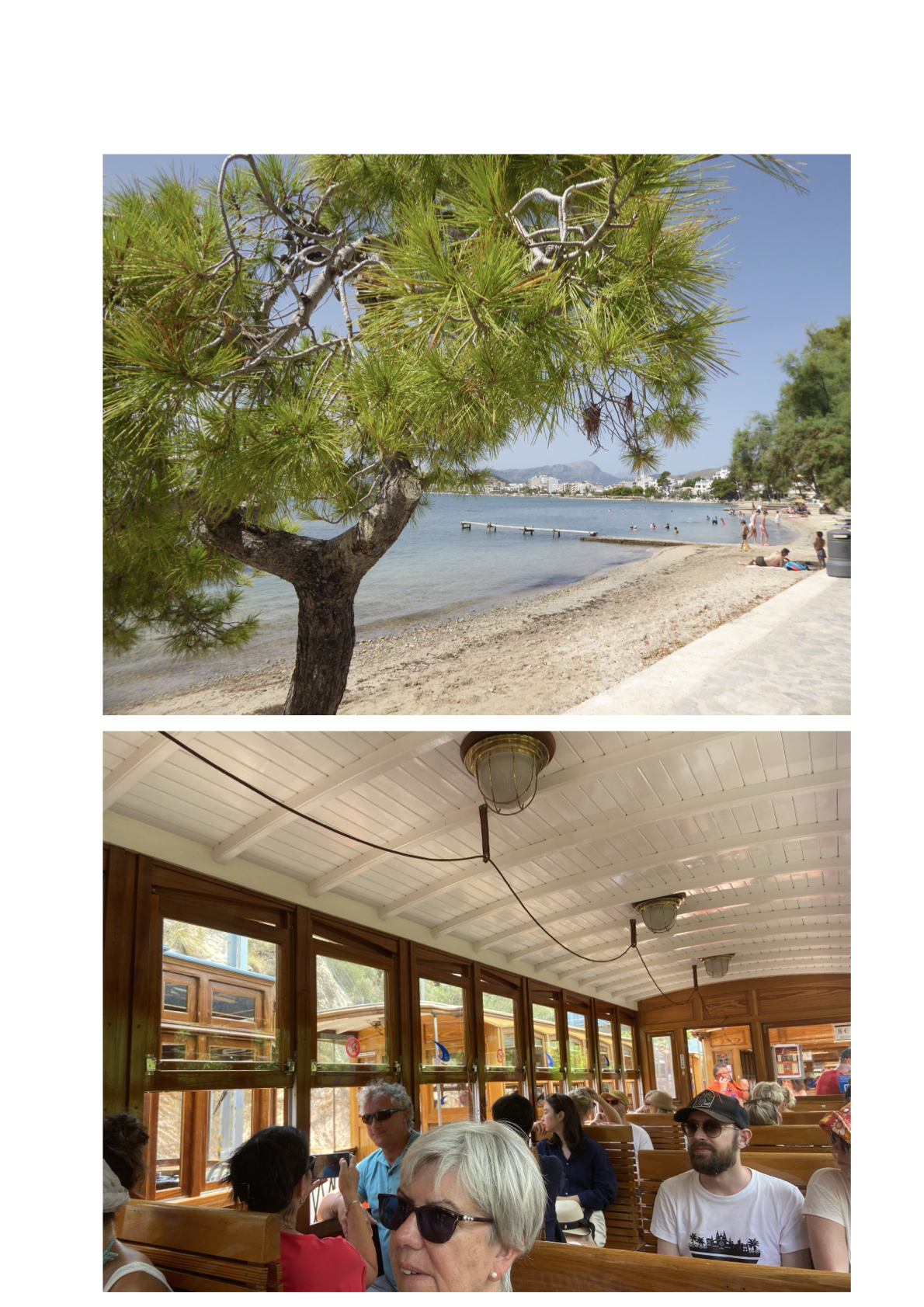
In this piece I wanted to oppose a calm tranquil early morning on the pine-walk in Pollensa, using the sounds of gentle lapping water, distant church bells, crickets etc with the activity of the little 1915 train journey from Palma to Soller, with excited voices, train tracks and brakes etc. I found that grouping my recorded sounds in this way inspired related piano writing and like Mompou bring these ‘opposing’ ideas together to conclude the piece. I also add to these 2 sound groups in the second half of the piece, with flamenco dancing feet joining the ‘active group’ and the sound of the congregation’s singing of the sanctus joining the ‘tranquil’ group of sounds.
The piano score sometimes requires synchronicity with the prerecorded sounds and at other times uses aural cues to move forward in the music. The aim is to dynamically blend the live piano with the other material, though it remains very much a solo piano work.
The piano writing uses tones found in the other material either naturally found such as the train whistle or created, such as resonating certain frequencies (within the lapping water for example).
This is a gentle piece, sharing fond holiday memories like a postcard, and even though my personal recollections of events will always be more precise than a listener perhaps, the impression given is hopefully relatable.
This short suite of 6 pieces (apart from the last piece) was composed and developed from fragments of folk tunes which might have been known to the Pilgrimage of Grace rebels in 1536, and perhaps sung as they marched to York. Rather than base the music around a detailed narrative (which does not exist), the music explores wide-ranging emotions to tell the story. From fervour and joy, through calm and reflection, to anger and sadness in the penultimate piece. (for more detail about the compositions and the relevant history please see below the videos).
Pilgrimage of Grace IV: ‘Blessed be that Maid Marie’
Pilgrimage of Grace V: Betrayed!
Pilgrimage of Grace VI: Timeless Beauty
I developed the ideas initially through improvisations at the piano, followed by a lot of editing, resulting in pieces reduced to their essential elements.
Stylistically I’m very eclectic when writing for the piano, and there is a lot of variety within the pieces, and I hopefully will revisit and explore further, some elements in future piano- based projects.
The story…
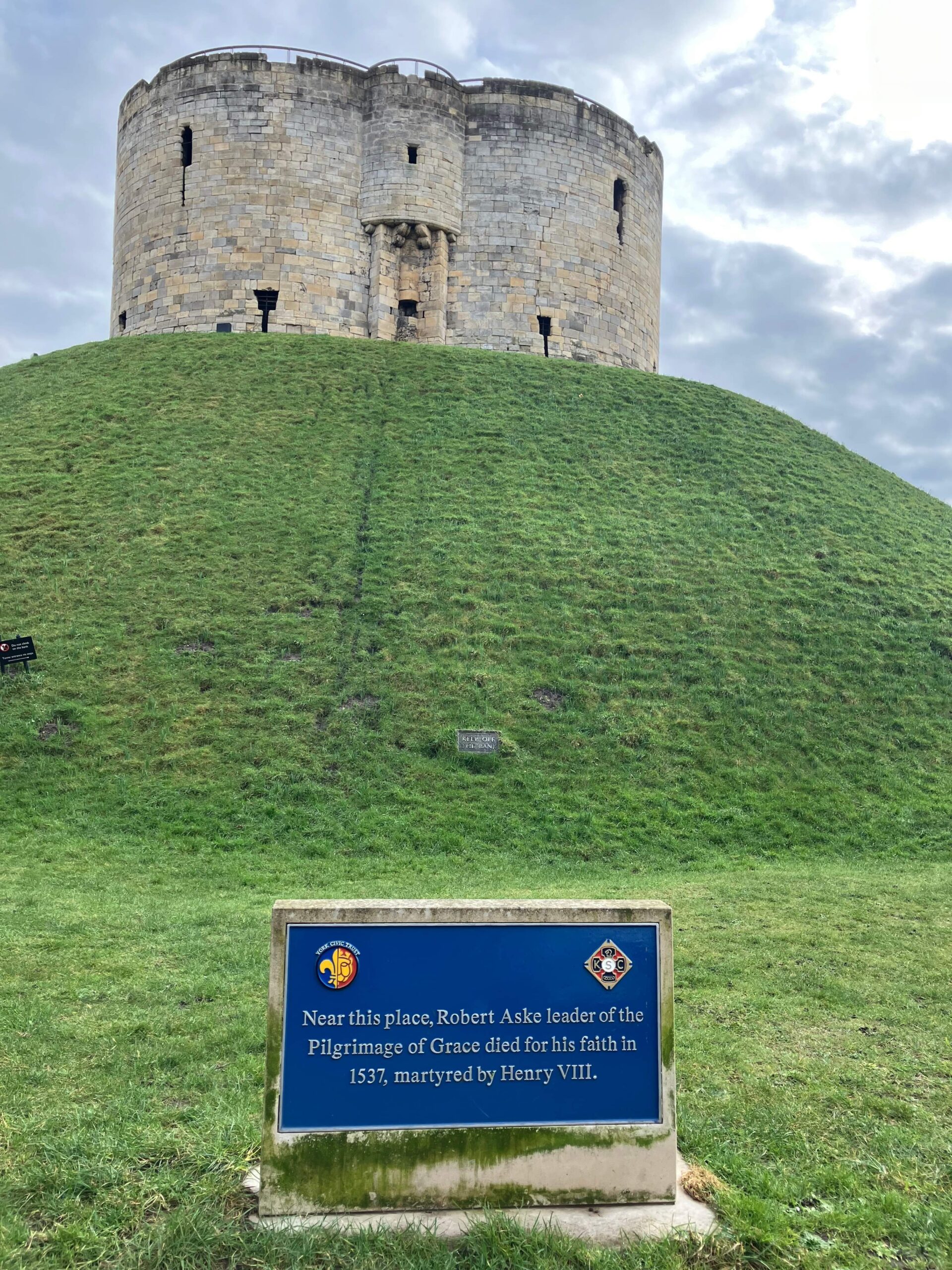
In 1536 Robert Aske from Aughton near Howden in East Yorkshire and fellow insurgents, gathered on Market Weighton hill to march on to Hull and most importantly to York. This was a significant rebellion against the King (Henry VIII) as a result of the dissolution of local monasteries and the seizing of wealth. The march known as ‘The Pilgrimage of Grace’ was not a religious pilgrimage but was keenly supported by the church.
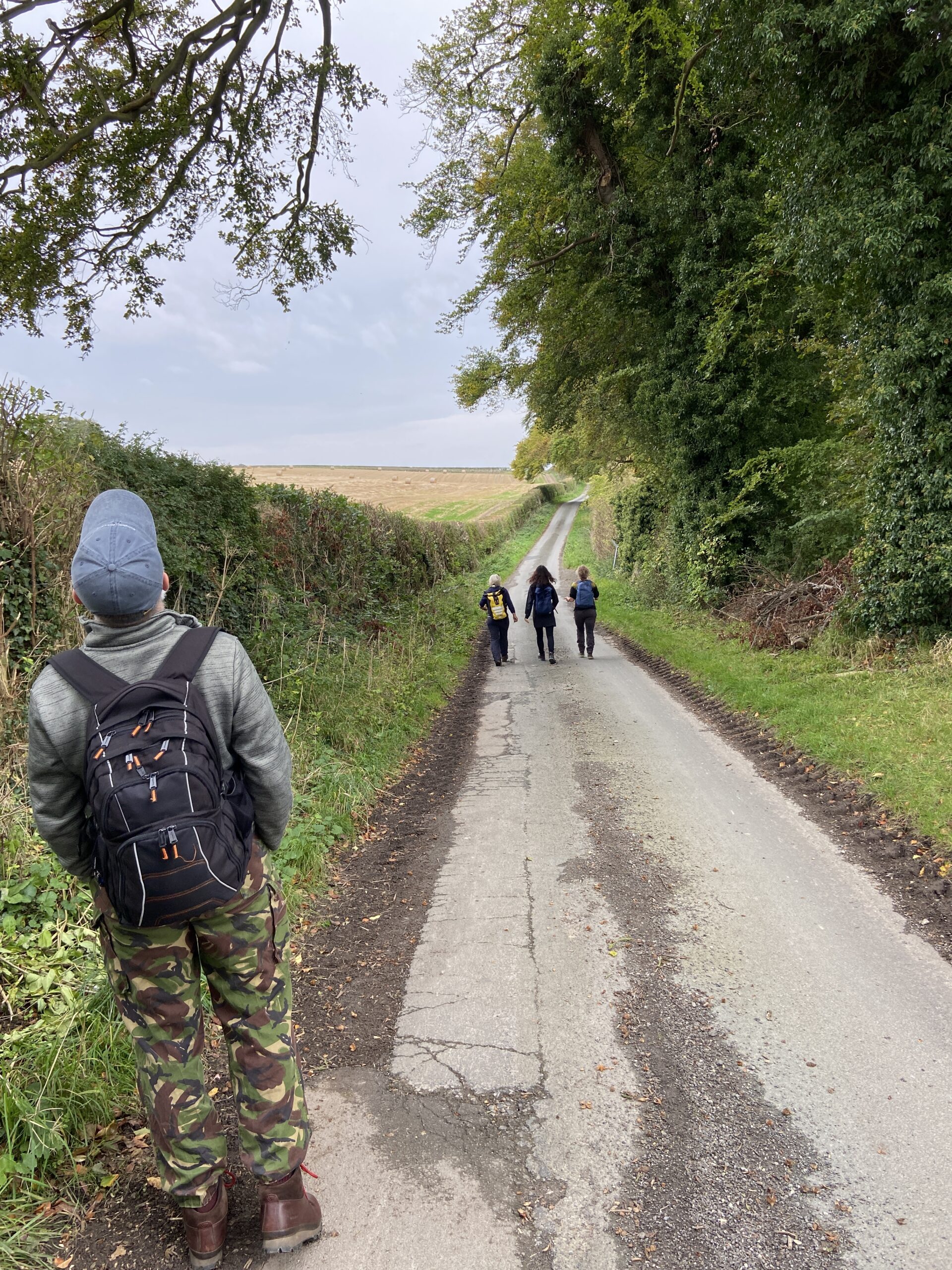
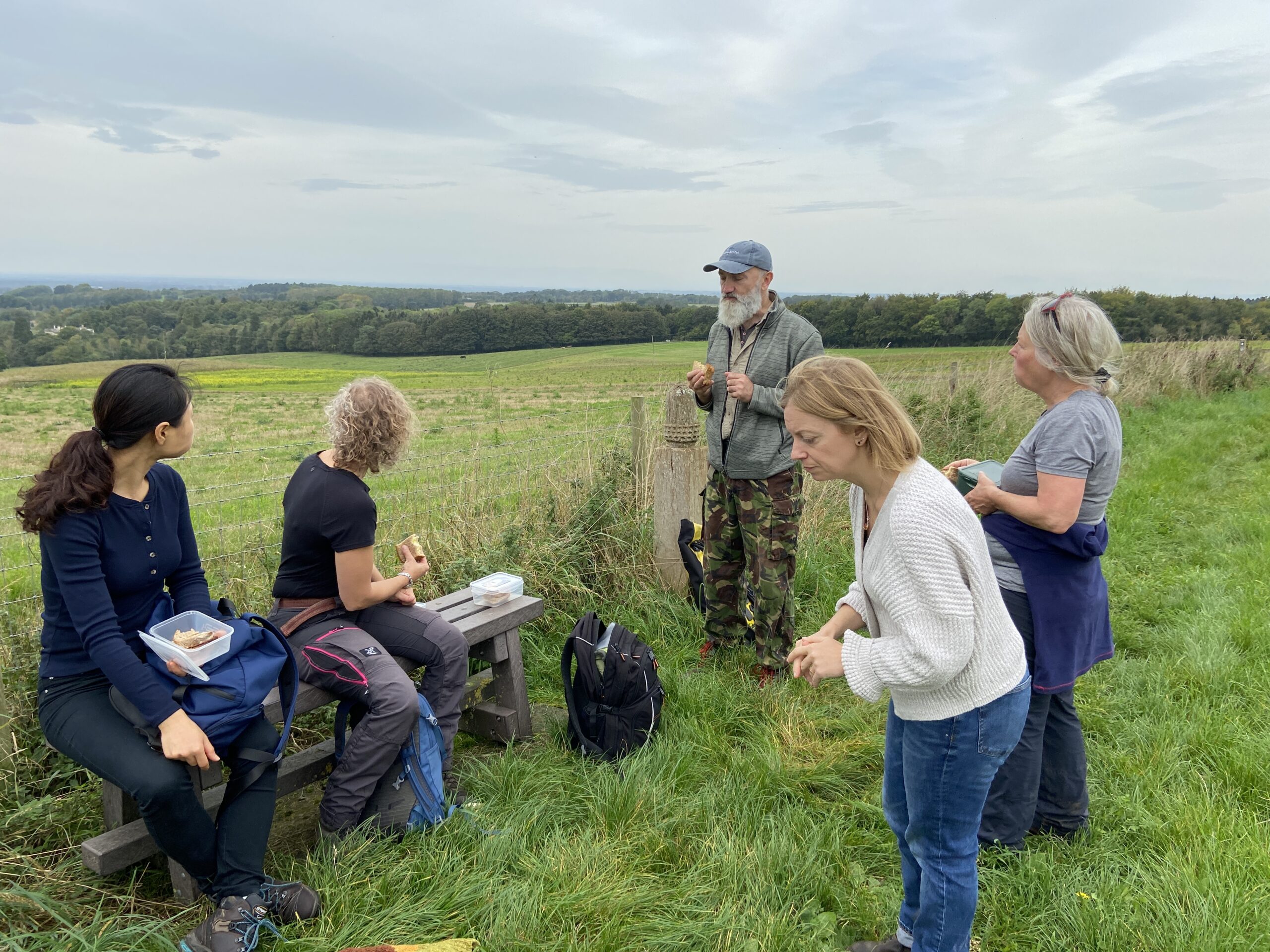
A section of the walk went via Warter and Nunburnholme priories and on to Pocklington, gathering supporters along the way. This 8 mile walk is now regularly walked by many, including recently by myself and members of our chamber choir ‘Coracle’, and was the inspiration for these piano pieces.
Sadly the story does not end well as after arriving and taking York the now sizeable rebel forces were met by the Duke of Norfolk at a location near Doncaster whereby a truce was negotiated and false promises issued on behalf of the King to meet grievances and reinstall local religious leaders. The marchers disbanded and later following false accusations, Robert Aske and 200 others were arrested and executed.
The music:
I: ‘As I went to Walsingham‘
A crowd of rebellious and angry citizens congregate on Market Weighton hill.
Fanfares and the singing of ‘ Walsingham’ (a pilgrimage song) all combine in this piece with a use of long pedalled phrases, to suggest a misty landscape.
The song (‘Walsingham’) was composed well before the rebellion and would be known to the rebels. Hidden within, is praise for Catholic Queen Mary, appropriate for a march against the Protestant King.
II : ‘From Priory to Priory’
Following in the footsteps of the marchers, our walk went from Warter down The Nun’s Walk (road) to Nunburnholme, and ascended through Bratt wood.
The music alludes to the gathering of supporters accompanied by the singing of ‘Hey Robin, jolly Robin’ and ‘Down in yon forest’ and the pealing Nunburnholme and Warter church bells. I imagine the scene to be noisy, but full of positive energy!
III: ‘Summer is Icumen In’
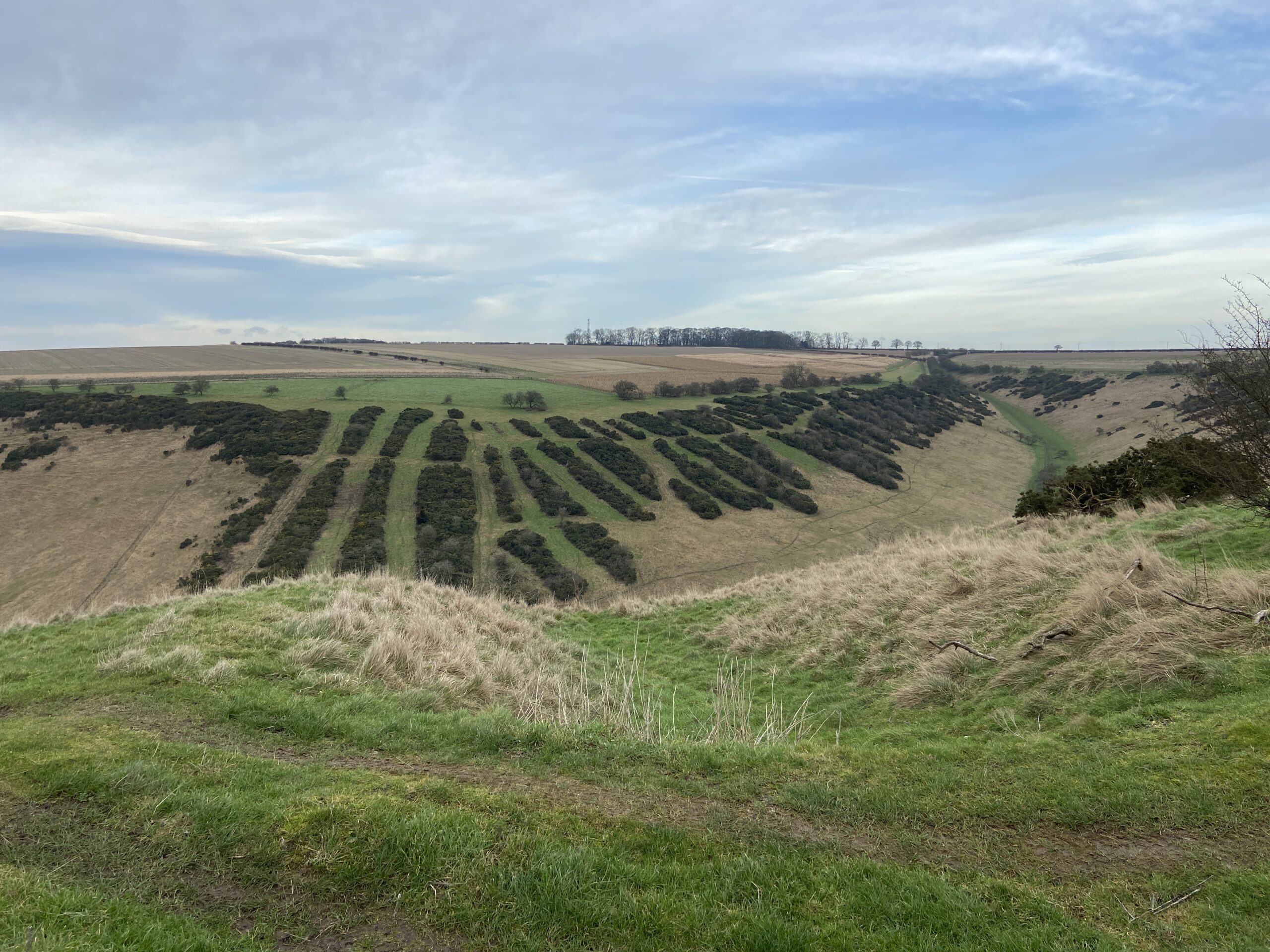
After the wood we walked on ancient routeways (on the Wolds way) with views towards York and Kilnwick Percy.
The wide open spaces, rolling hills and abundance of natural colour, form the inspiration for this piece. I feature ‘Summer is icumin in’ and ‘Lyke wake dirge’ as contrasting tunes that may have been known. The latter certainly in this region.
IV: ‘Blessed be that Maid Marie’
The featured melody is an old carol from the 16th century which may have been known. The imagined scene here for me is the quiet singing of the pilgrims at night camped outside Pocklington on their way to York. We know crowds were addressed in Pocklington square. Fragments of the tune can be heard on the wind at distance, with a star-lit night.
V: Betrayed!
The character of the music is angry and dissonant combining two of Henry’s compositions ‘Pastime with good company’ and ‘The hunt is up’ in dark ironic fashion.
Robert Aske and his rebel army agreed a truce with the King, but the following year he and other leaders were rounded up on trumped up charges, tried and executed.
The final bars of the piece, once more in a tonal world, present a sad final reflection on events.
Vi: Timeless Beauty
The music concludes with a piece celebrating the timeless beauty of the Wolds and the persistence of Nature. This is a relatively unchanging world, away from our human dramas, . It is easy to suppose that parts of the walk have changed little since 1536.
The inspiration for this work is a large book I borrowed entitled ‘Eos’; An enquiry into the theme of lovers’ meetings and partings at dawn in poetry. ‘
There are many examples from literature around the world in the book. In the English chapter Chaucer in the ‘Nonnes Preestes tale’ has the lovers warned by a cockerel, of imminent day. (The bird is often seen as unwelcome, detested and even treacherous to the lovers.)
Shakespeare has in Romeo and Juliet the lark heralding the morn, but Juliet pretends it is a nightingale.
I chose to set an Anglo-Irish ballad ‘The Lover’s Ghost’ in which the cockerel bade the lovers to part, but the lady is a ghostly visitant and the bird is a sign for her to return to the grave.
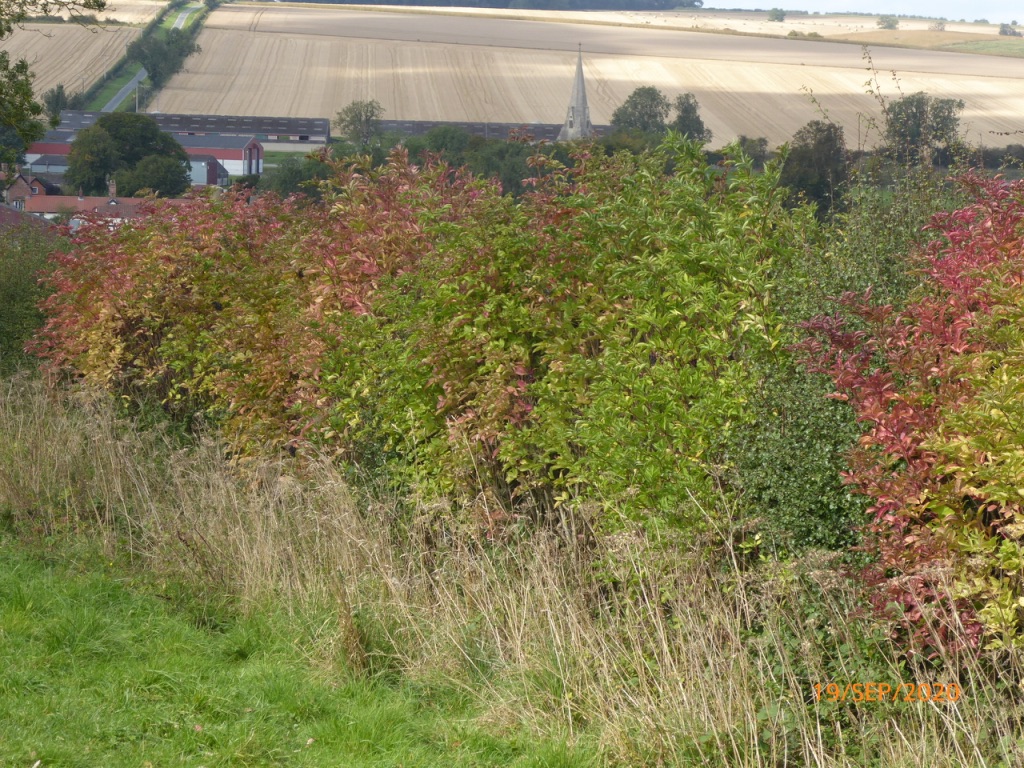
I wanted to set the mood for the choir piece with natural woodland and bird sounds from my archive of environmental recordings. I’ve used sounds recorded at Dawn in Barmby Moor and Londesborough churchyards,and in Warter, sounds in Bratt wood Nunburnholme and on the estuary at Bernaray in the Western Isles. Deliberately dream-like, the inclusion of water bird sounds and a church bell create a recognised but unreal soundscape. This coalesces (the sound is filtered) to a Bb and related harmonics before we hear the first ‘cello Bb introducing the choir.
I have had it in mind for some time to write a piece for choir and ‘cello where the ‘cello is not a solo instrument, but is rather an added voice to the overall texture. A very good recent example of this writing is in Eric Whitacre’s ‘The Sacred Veil’.
In my work the cello underpins the choir, and previews/reiterates phrases heard in the choir.
The choir piece itself is structured as follows; After an overlapping textural opening we hear the first verse divided amongst voices in the choir. This is followed by an extension musically, of the line ‘ night should be never never day’ . The verse following flatters the bird and implores him not to announce day, this leads to a climax followed by the return of the opening overlapping textural idea, but now a tone down reflecting a more sombre mood. The final section is more elemental as the spirit reveals her true nature.
We are left with a reiteration of ‘night should be never, day’. The final Eb/Ab in the choir is then taken up by a return of prerecorded natural sounds balancing the opening section, and emphasising this tonality. This is chiefly achieved through the use of a comb filter. However, many of the sounds are now slowed down and there is a sound I programmed on my Korg DW8000 synthesiser, representing the spirit lover leaving for the churchyard.
In addition to a poem ‘Range-finding’ by Robert Frost ,which places nature (in particular a spider) in the foreground, even on the battlefield, I found other poems by Walt Whitman, Emily Dickinson and Rudy Francisco featuring the spider. The Whitman and the Dickinson poems celebrate the beauty and ingenuity of the spider’s web, whilst the Francisco is contemporary, and asks us to be compassionate towards them when they come into our homes.
I use excerpts from the poems, which provide the text for my choral piece and allow me to create 3 sections for a choral piece showing 3 different musical moods. The first busy and expansive, the second slower and more reflective, the 3rd lyrical and appealing to our better natures. The final section also recapitulates the opening idea now more fully scored and in the brighter key of E (up one semitone from the opening) which continues the web idea to a conclusion and appropriately envelopes the piece.
The style of the piece has elements of American composers such as John Adams and harmonically at times Stephen Sondheim. I’m realising as a choral composer that the text suggests a style of writing so pieces can be very different.
Although perhaps not technically the most challenging piece, it is precise dynamically and with a lot of articulation detail. In particular the differing grouping of 8 quavers suggested by the movement of the creature.
Here is the latest part of my ‘Warter’ project; a piano solo inspired by the act of walking on the Yorkshire Wolds around Warter.
The music reflects the gentle undulation of the hills, stopping sometimes to appreciate the beauty of the landscape. Bird calls are heard particularly the ever-present red kites and alarms of pheasant and grouse. It is a peaceful place where you really can immerse yourself in its charms away from other worldly sounds. You can really be in the moment, listening to your own footsteps.
Musically, following large chords there are two elements . A busy theme giving the music an onward drive and alluding to the act of brisk walking, and a lyrical theme which emerges. This is ‘An Acre of Land’, a well-known East Yorkshire folk tune as timeless as this unchanging landscape. I have included points of repose in the music with the relaxing of the tempo suggesting moments of reflection; looking around.
The piece ends with an embellished version of the opening chords, but disappearing into the distance with a slow reminder of the walking music recalling a good day’s walking perhaps!