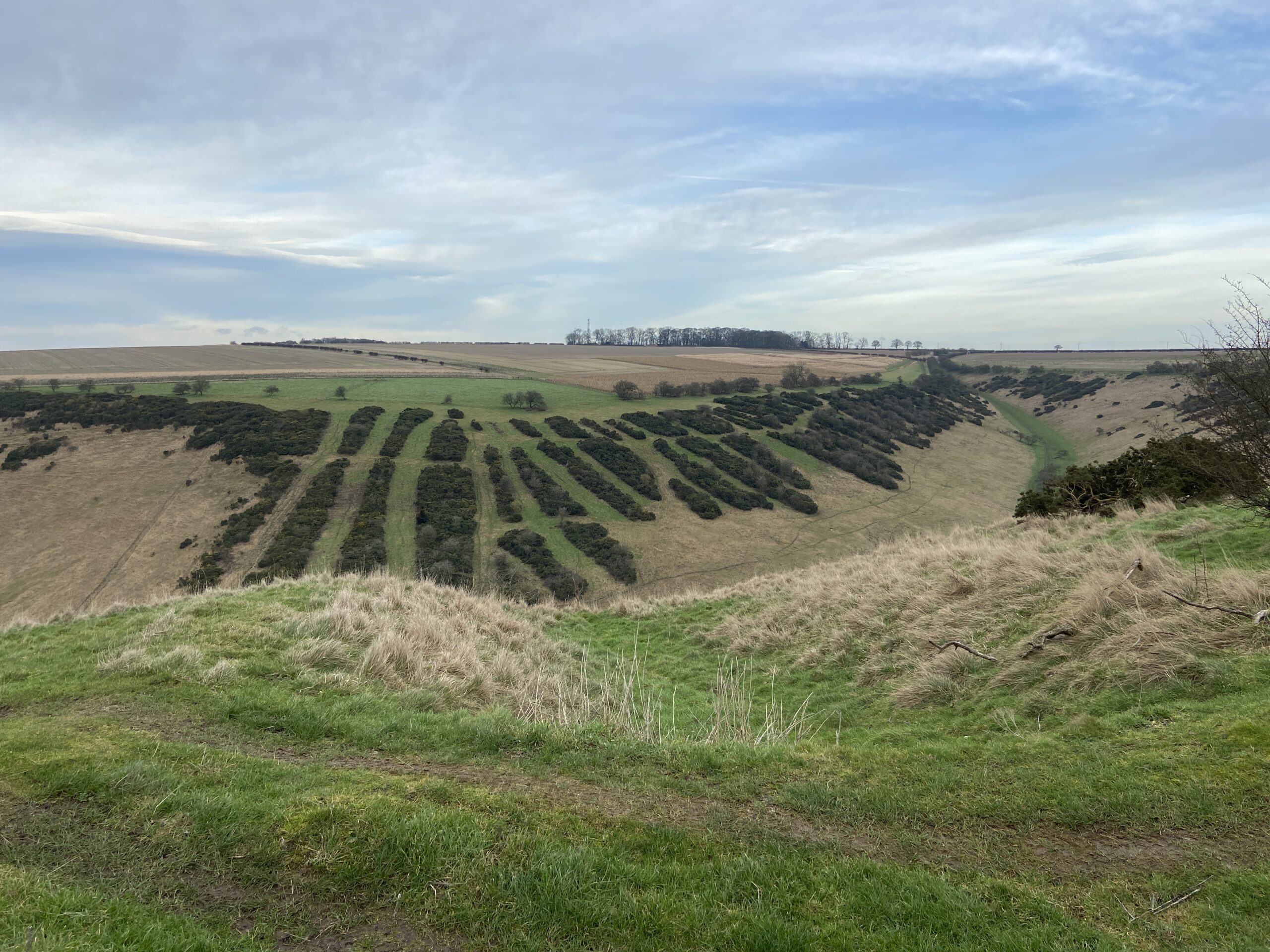
This short suite of 6 pieces (apart from the last piece) was composed and developed from fragments of folk tunes which might have been known to the Pilgrimage of Grace rebels in 1536, and perhaps sung as they marched to York. Rather than base the music around a detailed narrative (which does not exist), the music explores wide-ranging emotions to tell the story. From fervour and joy, through calm and reflection, to anger and sadness in the penultimate piece. (for more detail about the compositions and the relevant history please see below the videos).
Score of final piece in the set:
Pilgrimage of Grace I: ‘As I went to Walsingham’
Pilgrimage of Grace II: From Priory to Priory
Pilgrimage of Grace III: ‘Summer is Icumen In’
Pilgrimage of Grace IV: ‘Blessed be that Maid Marie’
Pilgrimage of Grace V: Betrayed!
Pilgrimage of Grace VI: Timeless Beauty
I developed the ideas initially through improvisations at the piano, followed by a lot of editing, resulting in pieces reduced to their essential elements.
Stylistically I’m very eclectic when writing for the piano, and there is a lot of variety within the pieces, and I hopefully will revisit and explore further, some elements in future piano- based projects.
The story…
In 1536 Robert Aske from Aughton near Howden in East Yorkshire and fellow insurgents, gathered on Market Weighton hill to march on to Hull and most importantly to York. This was a significant rebellion against the King (Henry VIII) as a result of the dissolution of local monasteries and the seizing of wealth. The march known as ‘The Pilgrimage of Grace’ was not a religious pilgrimage but was keenly supported by the church.
A section of the walk went via Warter and Nunburnholme priories and on to Pocklington, gathering supporters along the way. This 8 mile walk is now regularly walked by many, including recently by myself and members of our chamber choir ‘Coracle’, and was the inspiration for these piano pieces.
Sadly the story does not end well as after arriving and taking York the now sizeable rebel forces were met by the Duke of Norfolk at a location near Doncaster whereby a truce was negotiated and false promises issued on behalf of the King to meet grievances and reinstall local religious leaders. The marchers disbanded and later following false accusations, Robert Aske and 200 others were arrested and executed.
The music:
I: ‘As I went to Walsingham‘
A crowd of rebellious and angry citizens congregate on Market Weighton hill.
Fanfares and the singing of ‘ Walsingham’ (a pilgrimage song) all combine in this piece with a use of long pedalled phrases, to suggest a misty landscape.
The song (‘Walsingham’) was composed well before the rebellion and would be known to the rebels. Hidden within, is praise for Catholic Queen Mary, appropriate for a march against the Protestant King.
II : ‘From Priory to Priory’
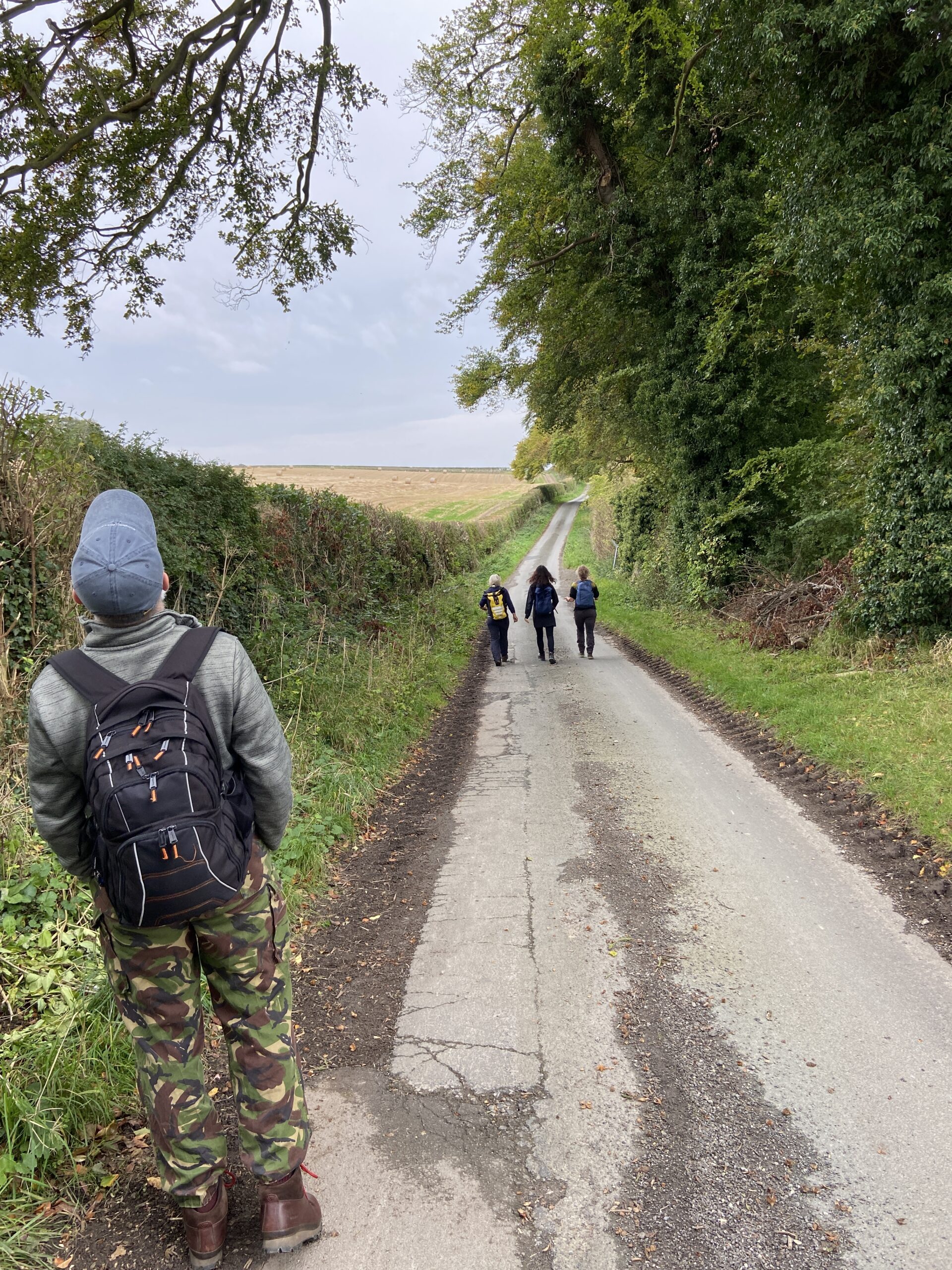
Following in the footsteps of the marchers, our walk went from Warter down The Nun’s Walk (road) to Nunburnholme, and ascended through Bratt wood.
The music alludes to the gathering of supporters accompanied by the singing of ‘Hey Robin, jolly Robin’ and ‘Down in yon forest’ and the pealing Nunburnholme and Warter church bells. I imagine the scene to be noisy, but full of positive energy!
III: ‘Summer is Icumen In’
After the wood we walked on ancient routeways (on the Wolds way) with views towards York and Kilnwick Percy.
The wide open spaces, rolling hills and abundance of natural colour, form the inspiration for this piece. I feature ‘Summer is icumin in’ and ‘Lyke wake dirge’ as contrasting tunes that may have been known. The latter certainly in this region.
IV: ‘Blessed be that Maid Marie’
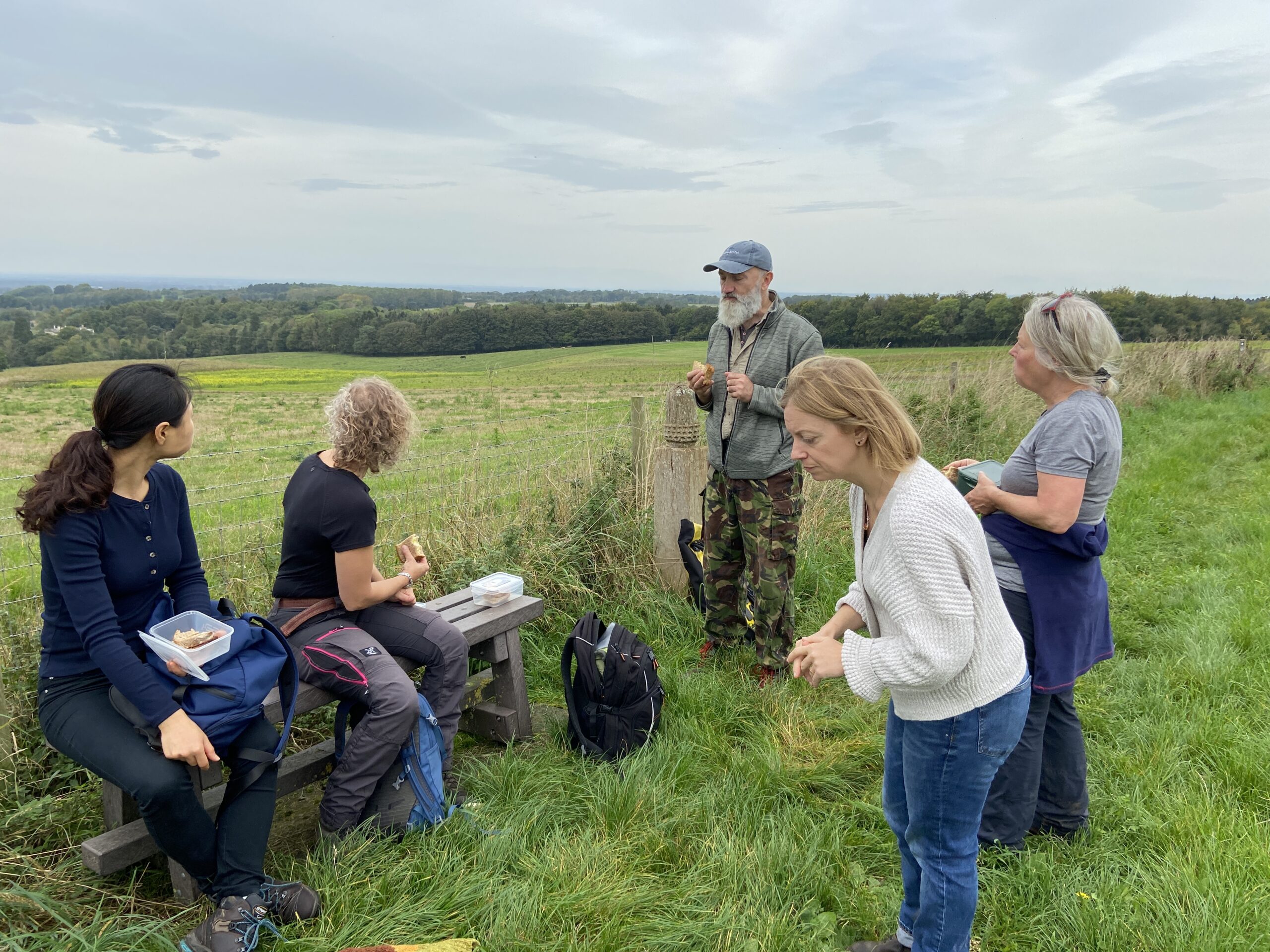
The featured melody is an old carol from the 16th century which may have been known. The imagined scene here for me is the quiet singing of the pilgrims at night camped outside Pocklington on their way to York. We know crowds were addressed in Pocklington square. Fragments of the tune can be heard on the wind at distance, with a star-lit night.
V: Betrayed!
The character of the music is angry and dissonant combining two of Henry’s compositions ‘Pastime with good company’ and ‘The hunt is up’ in dark ironic fashion.
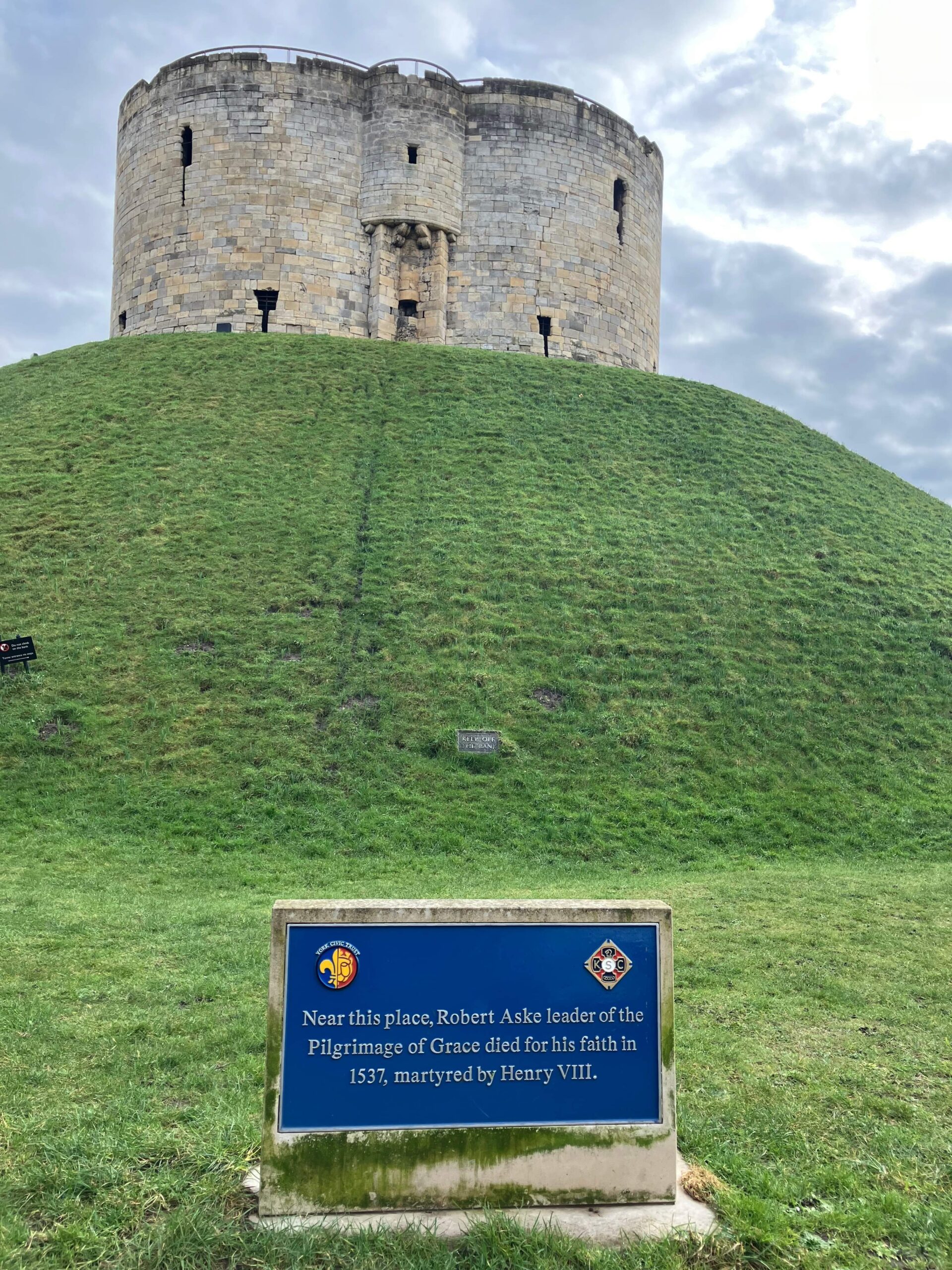
Robert Aske and his rebel army agreed a truce with the King, but the following year he and other leaders were rounded up on trumped up charges, tried and executed.
The final bars of the piece, once more in a tonal world, present a sad final reflection on events.
Vi: Timeless Beauty
The music concludes with a piece celebrating the timeless beauty of the Wolds and the persistence of Nature. This is a relatively unchanging world, away from our human dramas, . It is easy to suppose that parts of the walk have changed little since 1536.