
The writing of this piece coincided with my introduction by my friend and wonderful composer and performer Simon- Mary Vincent to the Steingraeber C-212 transducer piano. (Link https://www.steingraeber.de/en/innovationen/transducer/
Amongst other innovations the instrument allows compositions for piano and electronics to playback prerecorded material from computer (via transducers) to the piano, employing the piano soundboard and resonances in the piano. The result is to hear the sounds plus the live piano, in a truly integrated way.
I recently went to the Royal Academy in London to hear the piano, and as an ‘extended’ instrument for small concert venue it is for me an exciting development.
However, as access to these pianos is very limited (currently only one in, the UK) this piece can also be played using a pair of small desktop speakers either in or as near to the piano as possible.
I have recently performed music by Federico Mompou (his Fetes Lointaines) and I particularly like the duality of ideas in some of the pieces.So for example recreated bells are followed by a lively children’s song-like idea recalling aspects of the fetes.
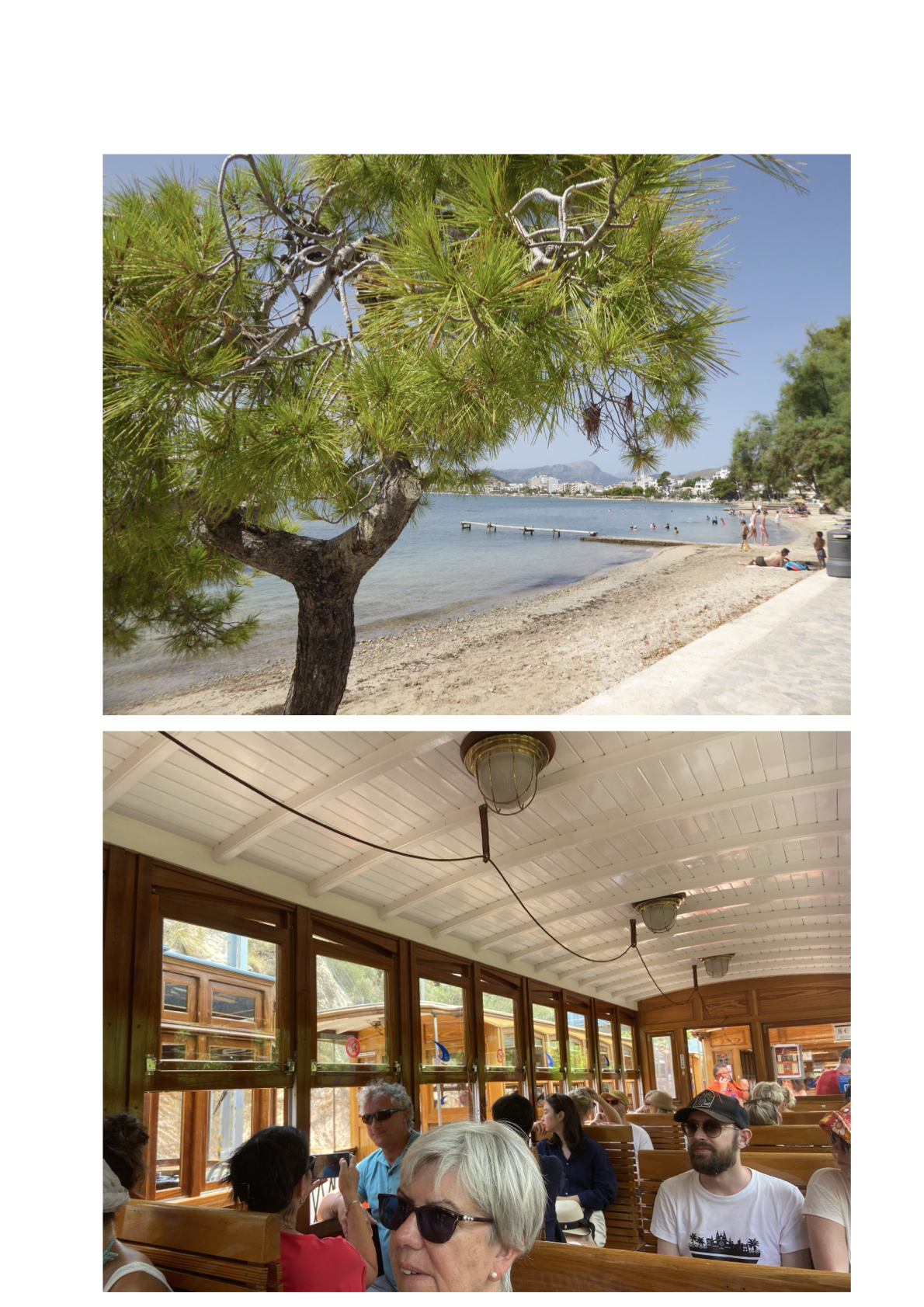
In this piece I wanted to oppose a calm tranquil early morning on the pine-walk in Pollensa, using the sounds of gentle lapping water, distant church bells, crickets etc with the activity of the little 1915 train journey from Palma to Soller, with excited voices, train tracks and brakes etc. I found that grouping my recorded sounds in this way inspired related piano writing and like Mompou bring these ‘opposing’ ideas together to conclude the piece. I also add to these 2 sound groups in the second half of the piece, with flamenco dancing feet joining the ‘active group’ and the sound of the congregation’s singing of the sanctus joining the ‘tranquil’ group of sounds.
The piano score sometimes requires synchronicity with the prerecorded sounds and at other times uses aural cues to move forward in the music. The aim is to dynamically blend the live piano with the other material, though it remains very much a solo piano work.
The piano writing uses tones found in the other material either naturally found such as the train whistle or created, such as resonating certain frequencies (within the lapping water for example).
This is a gentle piece, sharing fond holiday memories like a postcard, and even though my personal recollections of events will always be more precise than a listener perhaps, the impression given is hopefully relatable.